
What Are LED Video Walls and How Do They Enhance Events? A Planner’s Guide
What an LED video wall is, how it works, where it fits at conferences, launches and awards nights, and what to check before you hire one, from pixel pitch to cost.
 Kudos AV · Production insights
In this article
The CEO walks on, the room is bright, and the projected slides wash out to grey. Half the audience squints. The other half checks their phones. This is a lighting problem, and it is common.
Kudos AV delivers 500+ events a year, and the screen is one of the first things guests notice. If it looks weak, the whole event feels weaker.
So, what are LED video walls, and why do planners now book them over projectors? This guide gives you the short answer first, then the details you need to plan one properly.
Key takeaways
- LED video walls are large screens built from modular LED panels that lock together into one seamless image.
- Each panel holds tiny red, green and blue lights. A processor splits your content across the panels so they show a single picture.
- The biggest LED video wall benefits are brightness, flexible size and shape, and a clean image with no visible gaps.
- Pixel pitch (the distance between pixels) decides sharpness. Smaller means sharper at close range.
- Costs depend on wall size, pixel pitch, install complexity, crew and content, not on screen size alone.
- The best results come from planning the screen with the stage, lighting and content together.
What are LED video walls?
LED video walls are large displays made from many small LED panels joined edge to edge. Together they work as one screen that can be almost any size or shape.
Each panel is a cabinet packed with LED pixels. You can stack them into a flat 12 metre backdrop, curve them around a stage, or split them into side screens and totems.
Three terms come up in every quote:
- Panel (or cabinet): one building block of the wall.
- Pixel pitch: the gap between pixels, measured in millimetres. A smaller pitch means a sharper image.
- Processor: the unit that takes your video signal and spreads it across every panel.
Fact: unlike a projector, an LED wall makes its own light. That is why it stays readable in a lit room.
How do LED video walls work?
Each pixel is a tiny cluster of red, green and blue LEDs. A processor sends a signal to every panel, and the panels light up in sync to form one image.
Here is the chain from your laptop to the wall:
- Content source: slides, video, a live camera feed or a playback system.
- Video processor: scales the picture and maps it across the panels.
- Panels: receive their slice of the image and display it.
- Power and data cabling: keeps every panel fed and in sync.
- Operator: checks brightness, colour and signal throughout the show.
Content playback is the part planners forget. At Kudos AV, playback runs through tools such as Resolume, ProPresenter, Watchout and Disguise. Camera feeds go through ATEM or TriCaster vision mixers, so a presenter can appear on the wall live.
What does pixel pitch mean for your event?
Pixel pitch decides how close people can sit before they see individual dots. Our rule of thumb: a 2.6mm pitch suits close viewing, such as a conference or exhibition, and a 3.9mm pitch works for larger rooms and outdoor builds.
A common industry rule is that the pitch in millimetres roughly equals the minimum comfortable viewing distance in metres. Treat it as a guide, not a guarantee, and check it against your seating plan.
Where are LED screens for events used?
LED screens for events appear wherever a message needs to be seen from the back of the room. The most common uses are conferences, product launches, awards ceremonies, exhibitions and hybrid events.
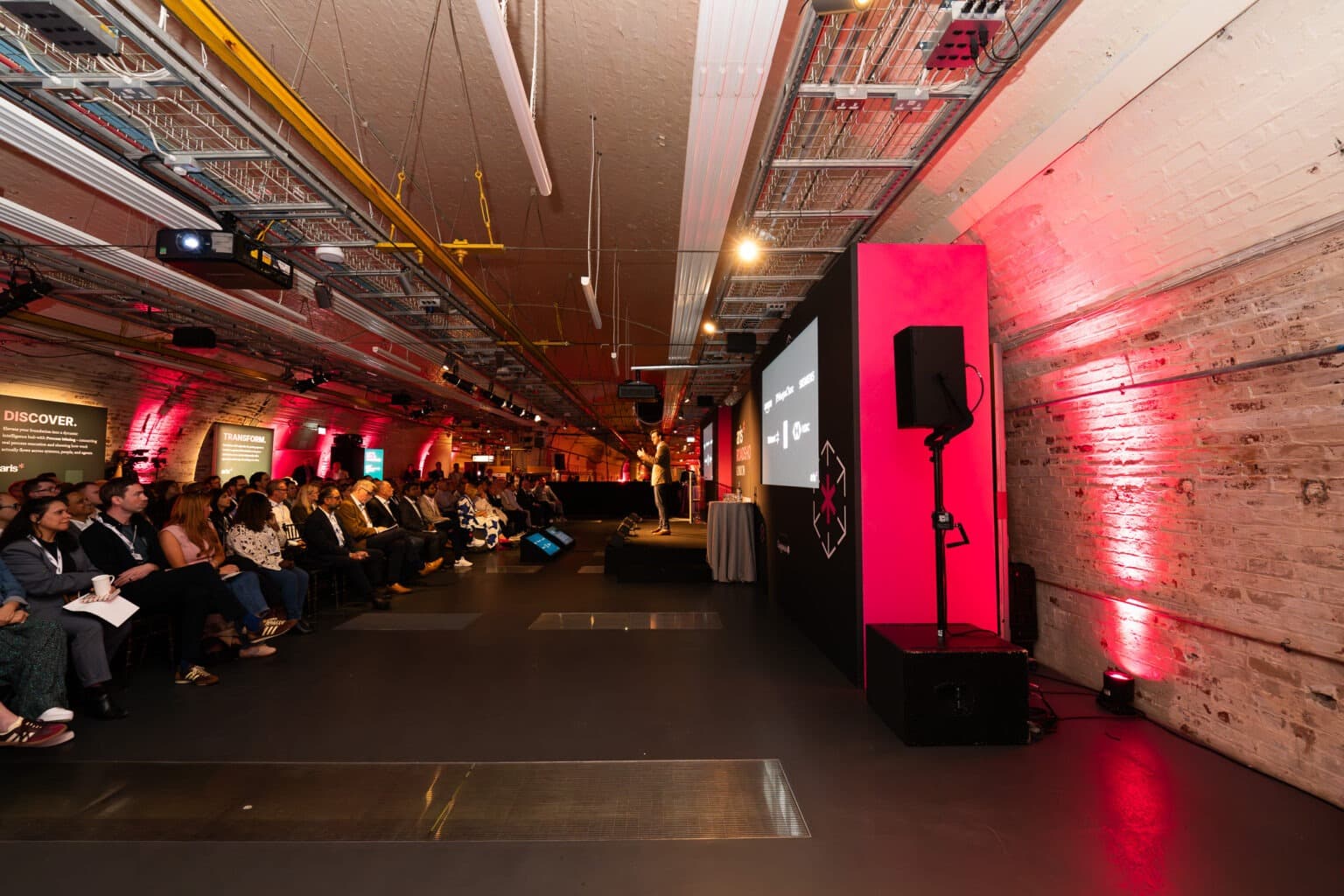
- Conferences: a main backdrop plus side screens carrying speaker camera feeds (known as IMAG) and slides.
- Product launches: reveal films, branded content and large product visuals.
- Awards ceremonies: winner videos, nominee reels and audience shots.
- Exhibitions: eye catching branded displays on the stand.
- Hybrid events: remote speakers shown to the room while the stage feed goes online.
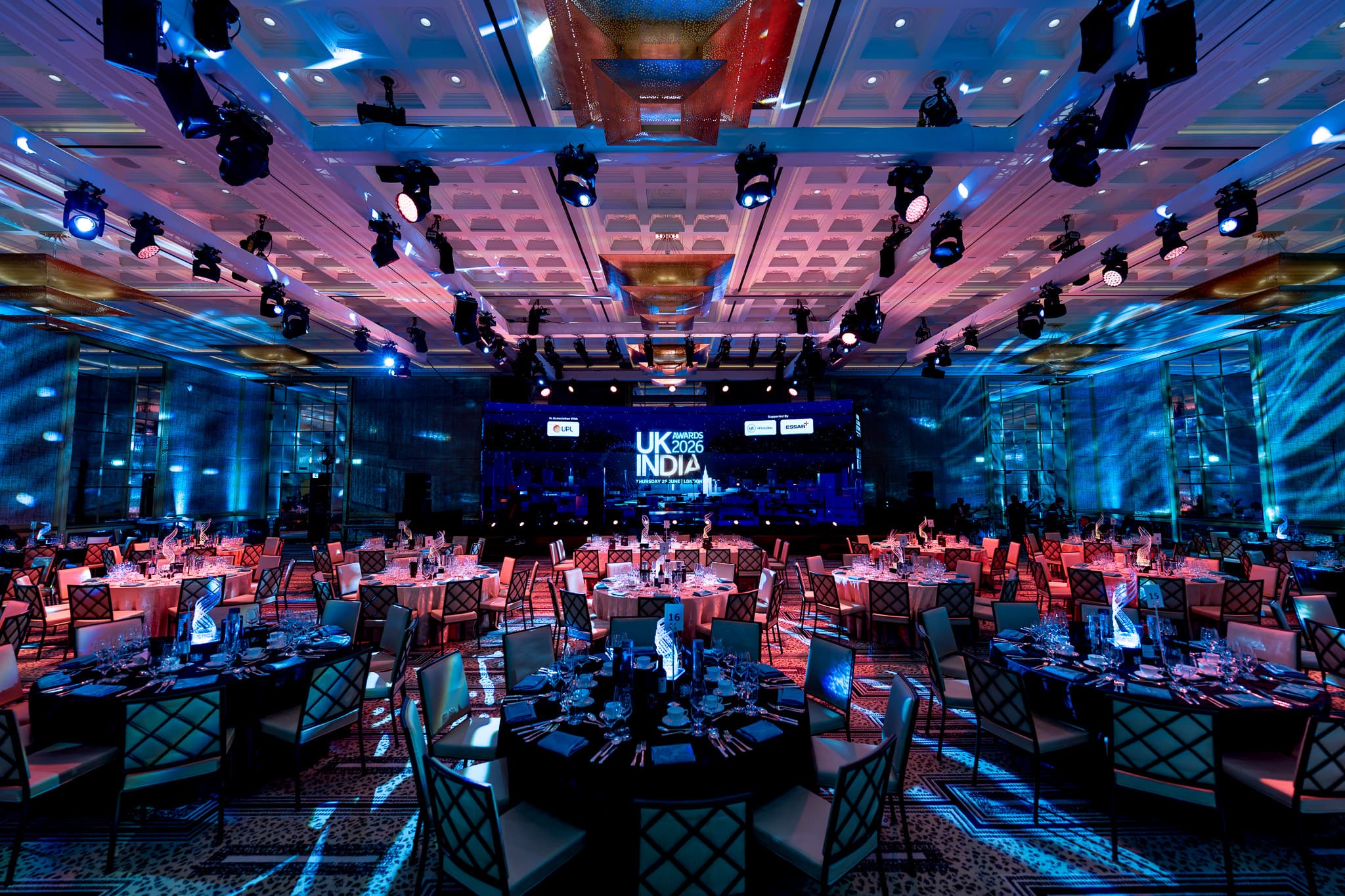
Example: the UK-India Awards 2026 at The Peninsula London used a curved LED wall with live cameras. The curve wrapped the stage and kept the picture visible across the ballroom.
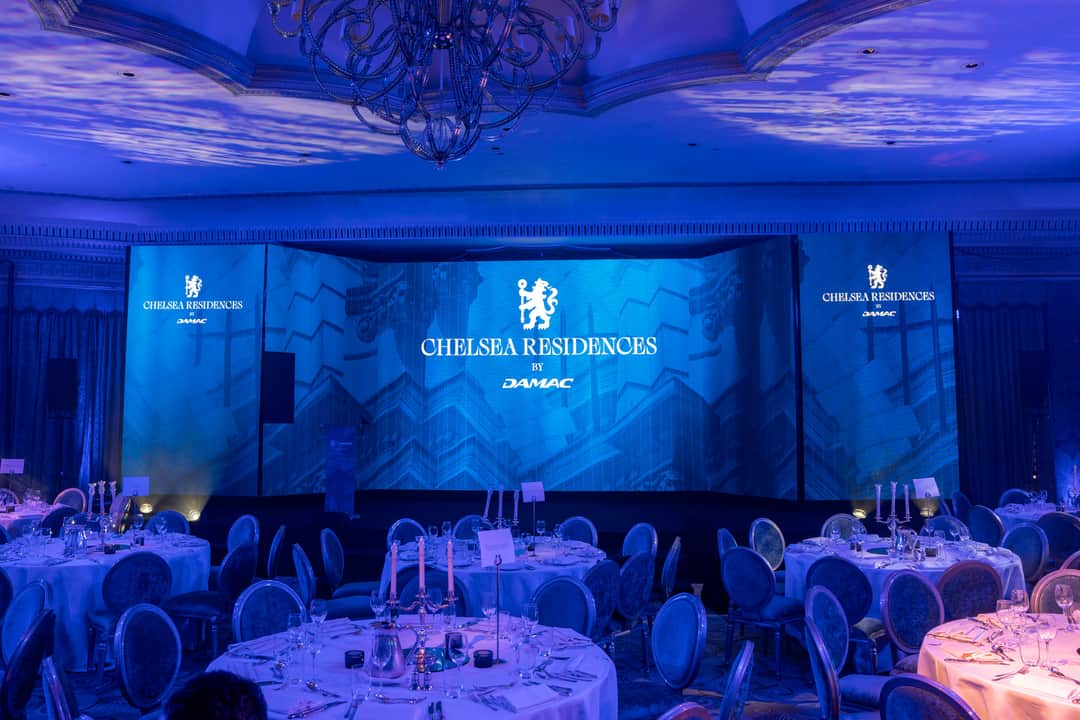
Example: for the Chelsea Residences launch at The Dorchester, a three screen layout carried the presentation. Splitting content across screens lets the room see the visuals without losing the speaker.
You can read more about our work on our video production page.
What are the main LED video wall benefits?
The main LED video wall benefits are brightness, flexibility and image consistency. They also cut down on the small failures that embarrass planners on the day.
- Readable in a lit room. Projection dims when you turn the lights on. LEDs do not. Most corporate events are not held in the dark, so this matters. Our guide on why LED displays are replacing traditional projection at corporate events covers this in full.
- Any size, any shape. Panels are modular, so you can build wide, tall, curved or angled to suit the stage.
- No visible gaps. An LED wall reads as one surface. LCD walls show bezels between screens.
- Strong colour and contrast. Brand colours hold up under stage lighting.
- Works with live production. Cameras, graphics and playback all feed the same wall.
- Scales with the event. The same system suits a 50 person boardroom or a large launch, as long as the panels match the room.
Expert opinion: the biggest benefit is not the size. It is that the audience can read your slides without effort, and that changes how long people stay engaged.
LED wall vs projector vs LCD: which is right?
Choose LED for bright rooms and large, seamless images. Choose a projector for unusual surfaces or tight budgets in dark rooms. Choose LCD for smaller displays where bezels are not a problem.
| Feature | LED video wall | Projector | LCD video wall |
|---|---|---|---|
| Works in a lit room | Yes | Limited | Yes |
| Seamless image | Yes | Yes | No (bezels) |
| Flexible shape | Yes | Depends on surface | No |
| Setup effort | Higher | Lower | Medium |
| Best for | Stages, launches, awards | Odd surfaces, dark rooms | Small displays |
Projection still has a place. Laser projectors with edge blending cover wide or non flat surfaces where LED is not the right fit. A good supplier will tell you which one your room actually needs.
What should you check before hiring an LED wall?
Check pixel pitch, venue limits, content format and crew before you sign. Most screen problems come from planning gaps, not faulty kit. Use this checklist:
- Viewing distance: match the pixel pitch to where the front row sits.
- Venue access: check ceiling height, rigging points, load in routes and floor strength.
- Wall size and shape: ask for a visual mock up against the stage.
- Content format: send slides and video files in the right aspect ratio, and tell your supplier early.
- Run of show: know when the wall changes from slides to camera to film.
- Crew: ask who builds, runs and strikes the wall.
- Backup: ask what happens if a panel or signal fails.
Recommendation: test content on the wall before doors open. A slide that looks fine on a laptop can crop badly on a wide wall.
If you want the supplier to handle the lot, a full service team can design, build and run the screen alongside sound and lighting. Our guide on why full service AV beats piecemeal hire shows where this saves time.
How much does an LED video wall cost to hire?
Cost depends on wall size, pixel pitch, install complexity, crew and content. There is no standard price per square metre, because every build is different. These are the factors that move the quote most:
- Size: more panels mean more power, rigging and labour.
- Pixel pitch: a finer pitch costs more.
- Shape: curves and angles need extra design and build time.
- Install: flown walls need rigging; ground stacked walls need support structures.
- Crew: technicians for setup, operation and breakdown.
- Content: motion graphics, camera feeds and playback add scope.
- Dry hire vs supply and operate: the first is equipment only; the second includes crew.
Tip: send your venue, date, audience size and run of show when you ask for a quote. It shortens the back and forth. Kudos AV aims to quote the same day on most enquiries.
For a broader budget view, see our guide on what event production costs in London.
Ready to plan your screen?
Planning a conference, launch or awards night? Kudos AV supplies and runs LED walls from our own inventory, with technicians on site. Our walls use Unilumin, Absen and ROE Visual panels, in 2.6mm and 3.9mm pitch.
Explore our LED video wall hire London service, or browse our LED screen hire London options. Tell us the date, venue and what you have in mind, and we will come back with a straight answer, usually the same working day.
Get a quote or chat with us on WhatsApp.
Final thoughts
A screen should help your message land, not compete with the room. When the wall is the right size, the right pitch and planned alongside the stage, nobody notices the technology. They just see the content.
If you are weighing up options for your next event, Kudos AV can size the wall, build it and run it. Talk to our team and tell us what you are planning.
Your questions, answered
Frequently asked questions
01How big can an LED video wall be?
As big as the venue, rigging and budget allow. Panels are modular, so walls can be small totems or wide stage backdrops. We have supplied walls up to 12 metres wide. Ceiling height and load limits usually set the real limit.
02Can you use an LED video wall outdoors?
Yes, with the right panels. Outdoor builds typically use a larger pixel pitch such as 3.9mm and need a weather protection plan. Wind loading and power supply should be checked early.
03Are LED video walls better than projectors?
For most corporate events, yes. LED stays bright with the lights on, while projectors struggle in lit rooms. Projectors still suit unusual surfaces or dark, small spaces.
04How long does setup take?
It depends on size and shape. A small wall can go up in a few hours. Large or curved builds need longer, plus time for content testing. Ask your supplier for a load in schedule.
05Do I need a technician with an LED wall?
Most planners do. Someone needs to run the processor, manage content switching and watch for faults. Dry hire is available if you have your own operators, but fully crewed is safer for live shows.
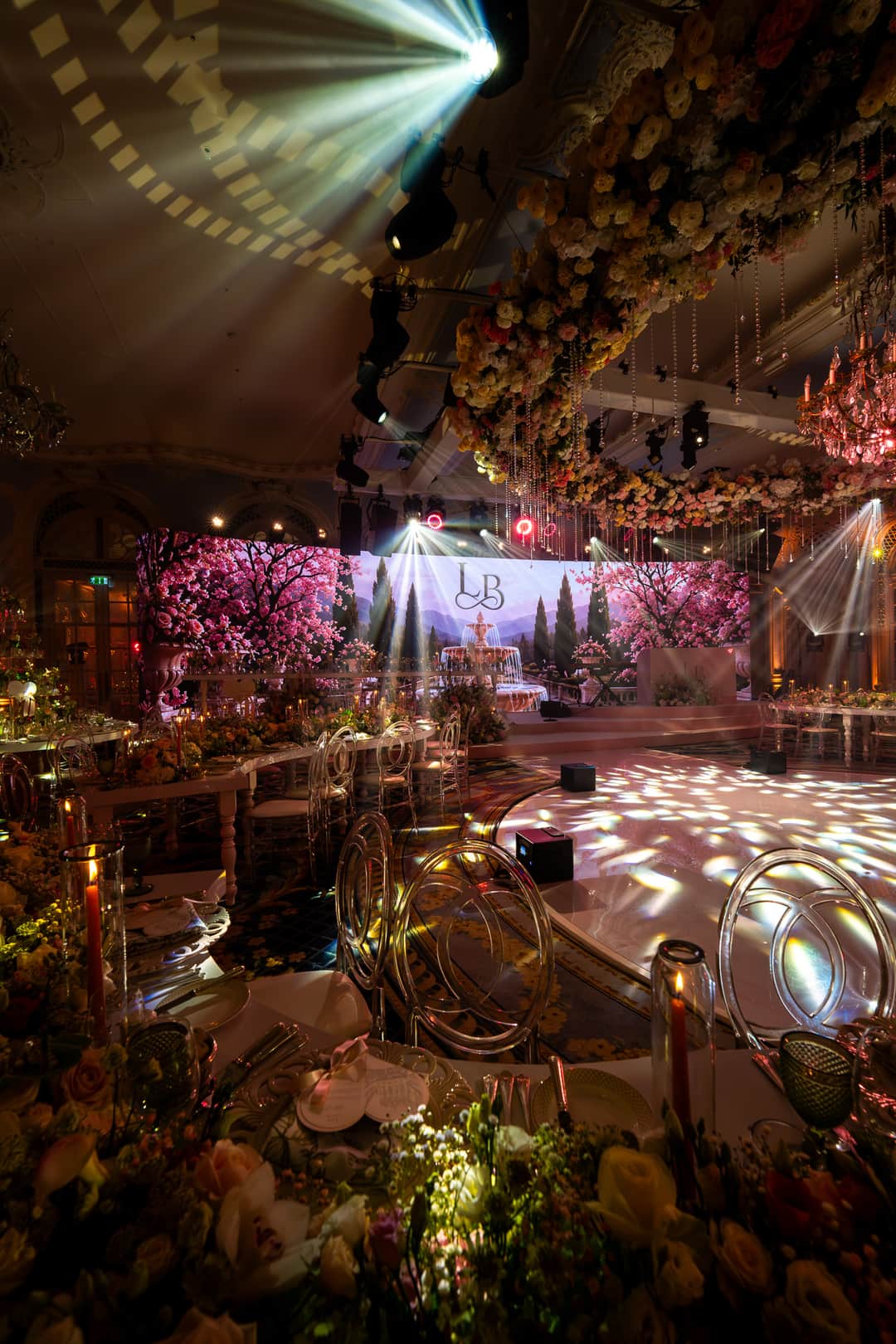
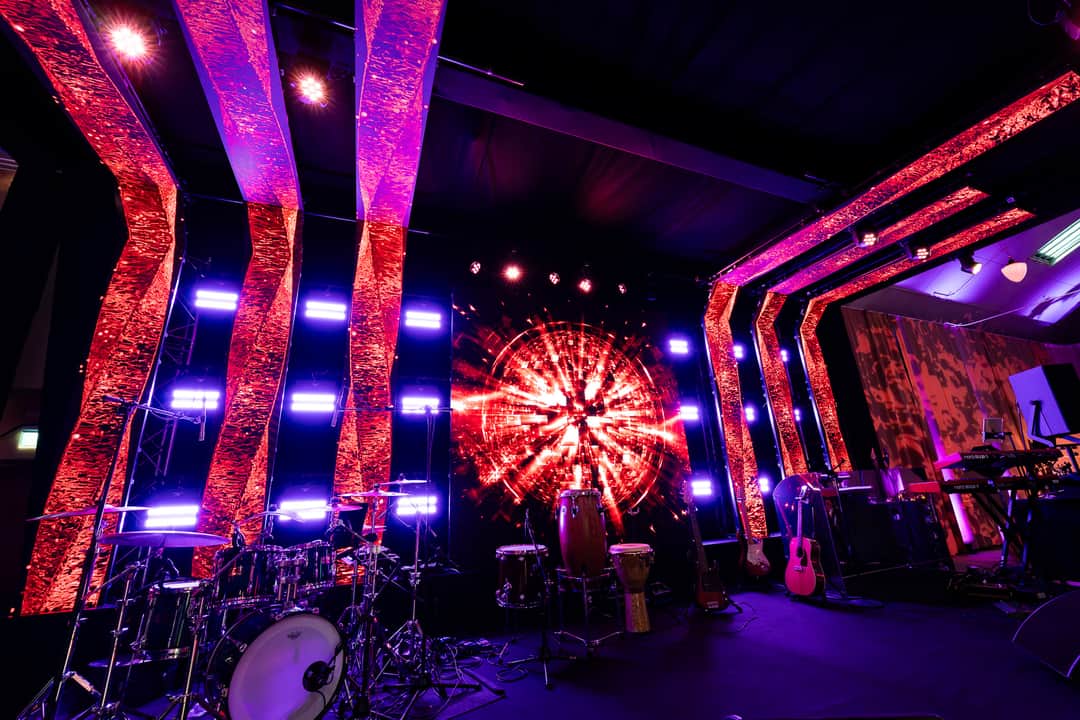
LED walls in action
 Insights & Guides
How Much Does Event Production Really Cost in London? A Budget Breakdown for Planners
Venue hire is only the start. Here is what actually sits inside an event production budget in London, which decisions move the number most, and how to lock the cost down before you brief suppliers.
Read the guide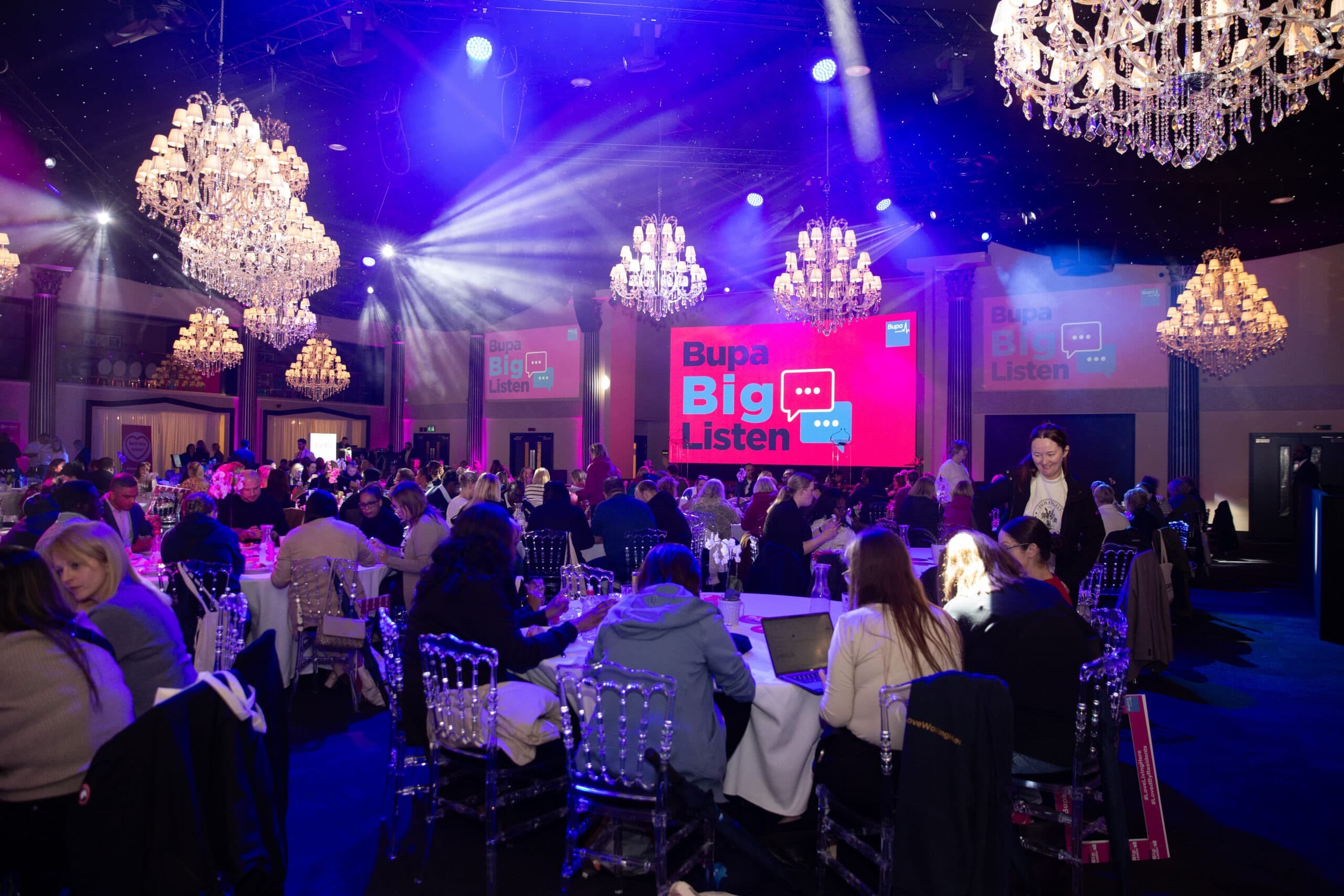 Insights & Guides
Why LED Displays Are Replacing Traditional Projection at Corporate Events
Projection dims the moment you turn the lights on, and corporate events are not held in the dark. Why LED has taken over the conference stage, and the cases where a projector is still the right call.
Read the guide Insights & Guides
Why Full-Service AV Beats Piecemeal Hire for Complex Corporate Events
Hiring sound from one supplier, screens from another and lighting from a third looks like the flexible option until the load in. Here is where piecemeal hire costs organisers time, and when a single production team is worth it.
Read the guide