
How to Prevent Technical Failures at Corporate Events: A Planner’s Reliability Checklist
Microphones die, screens go black and streams drop out, almost always because of something missed in planning rather than something wrong with the kit. Here is the checklist that stops it, with the numbers most guides leave out.
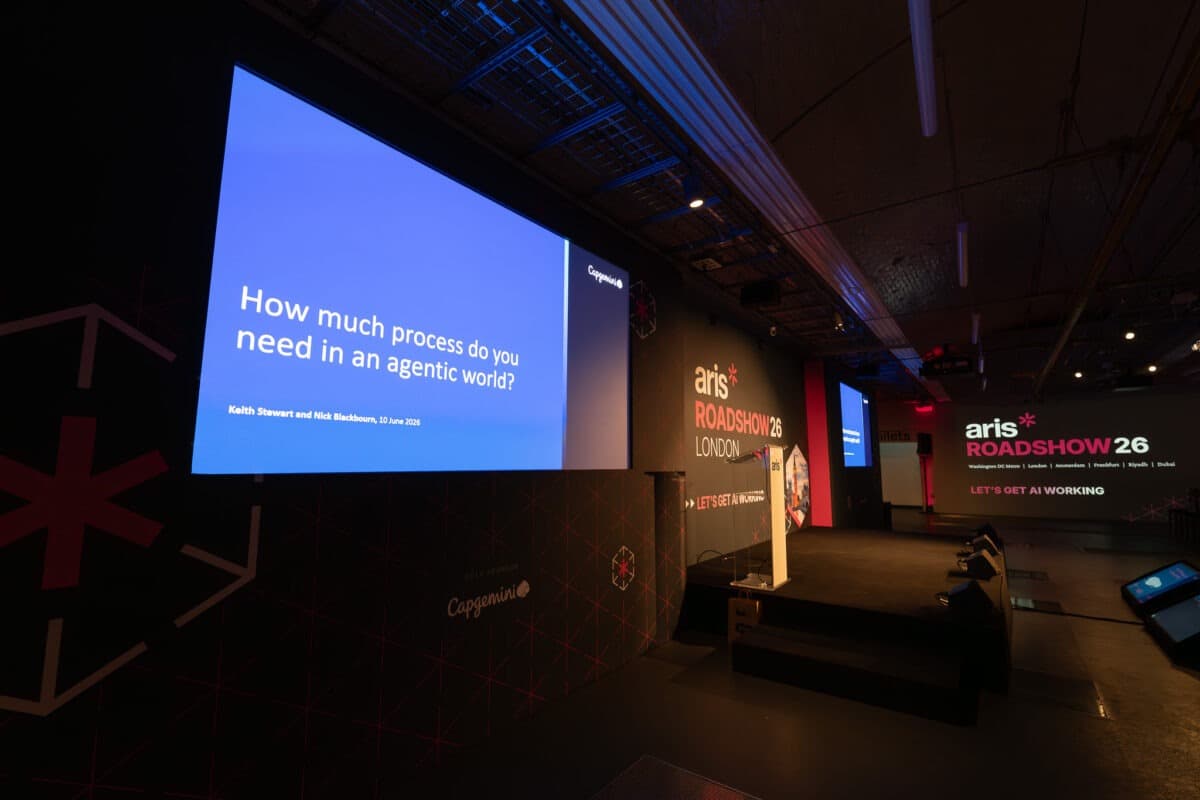 Kudos AV · Production insights
In this article
The microphone dies mid sentence. The main screen goes black as the CEO reaches their punchline. The live stream drops just as the Q&A starts. Every planner has watched one of these happen, and the room always notices.
What is worth knowing is that almost none of it is caused by bad equipment. It is caused by something small that nobody checked: a cable nobody swapped, a laptop nobody tested, a circuit nobody asked about. Keeping backup equipment corporate events can actually reach on the day is what turns a failure into a five second pause.
Kudos AV supports events across London and the UK with complete event production services, including LED screens, sound systems, stage solutions and live streaming support. This is the checklist we work to, including the numbers most guides leave out.
Key takeaways
- Most technical failures are planning failures, not equipment failures.
- Four specifics catch people out repeatedly: upload bandwidth, radio microphone licensing, presentation files that were never opened on the show machine, and power nobody confirmed in writing.
- Backup equipment only helps if it is on site, powered and already tested.
- Test three times: before it leaves, on arrival, and at rehearsal with the real presenters.
- The measure of a good crew is not that nothing goes wrong, it is that the audience never finds out.
Why do technical failures happen at corporate events?
Professional equipment is generally reliable. What is not reliable is the set of assumptions around it: that the venue's power is what the floor plan says, that the presenter's deck will open, that the wifi at the back of the room is the same wifi as at reception.
A missing adapter, an untested laptop, a circuit shared with the kitchen, a venue restriction discovered at load in. Each is trivial on its own, and each can stop a production. This is why experienced teams treat preparation as seriously as the show itself.
Working with an experienced event sound company London organisers trust is largely about having someone whose job is to distrust those assumptions on your behalf, and to check them early enough that being wrong is cheap.
The four that catch people out
Most reliability checklists stay general. These four are where corporate event AV actually fails, and all four are solvable weeks in advance.
1. Upload bandwidth, measured rather than assumed
A 1080p stream is typically encoded at 4.5 to 6 Mbps. The rule of thumb is to plan for around 1.5 times your encoded bitrate in sustained upload, so a 6 Mbps stream wants roughly 10 Mbps of headroom, and to keep the stream below about 70 to 75 per cent of the real upload speed so there is room for audio, overlays and the network having a bad minute.
The part people skip: measure it on a wired connection, at the point in the room you will actually stream from, at a time of day when the building is busy. A speed test at reception on a quiet morning tells you very little. For anything with an online audience, the conference live streaming London venues can actually support should include a bonded 4G or 5G backup that has been tested, not just carried.
2. Radio microphone licensing
In the UK this is genuinely binary, and it surprises people. Channel 70, 863.1 to 864.9 MHz, is licence exempt: you can turn up and use it. Channel 38, roughly 606.5 to 613.5 MHz, requires an Ofcom PMSE licence, and in exchange gives you around ten channels that will hold up in a busy building.
If your event needs more than a couple of microphones, you are probably on Channel 38, which means somebody needs to hold that licence. Find out whether the venue already has one, because assuming it does is how a panel discussion ends up sharing two handhelds.
3. Presentation files, opened on the show machine
The single most common failure at a corporate event is a deck that behaves differently on the event laptop than on the author's. Fonts substitute and reflow the slide. Embedded video does not travel with the file. A 16:9 deck meets a 16:10 screen. Keynote and Google Slides exports lose builds and transitions.
The fix is dull work, which is probably why it gets skipped: open every deck on the actual machine that will run it, play every embedded video with sound, and do it before the presenter is standing next to you.
4. Power, confirmed in writing
Power is the one that turns a technical problem into an evacuation, and it is almost always settled by a conversation nobody had. A floor plan showing sockets tells you where power is, not how much of it you get or who else is drawing on it.
The questions worth asking the venue, in writing, well before load in:
- What supply is available at the positions we need it, and is it single or three phase?
- Is that supply shared with anything else, particularly catering, heating or air conditioning?
- Where is the nearest distribution point to the stage and to the control position?
- Is there a house electrician on site during the event, and how do we reach them?
- Do we need a temporary supply, and who arranges and pays for it?
- What is the procedure if a circuit trips during a live session?
Those answers decide whether your lighting rig, LED wall and catering can coexist. Getting them in writing weeks out costs one email. Discovering the answer at 7am on show day costs the schedule, and sometimes the show.
Working out what you actually need
You do not need to be an electrician to sanity check this, you need to be able to add up. Every piece of kit carries its rated power on a label or in its manual, in watts. Total the watts of everything that will sit on one circuit, then divide by 230, the nominal UK single phase voltage, and you have the current in amps. Compare that with what the circuit is rated for.
Two things that catch people doing this for the first time. Leave headroom rather than working to the limit, because lamps, motors and anything with a power supply draw a surge at switch on that is well above their running figure, which is why a rig can trip a breaker at the moment you turn it on and then run happily all day. And do the sum per circuit, not for the whole room: three separate 13A sockets on one ring main are not three separate 13A supplies.
Anything beyond a couple of standard sockets means temporary distribution, and that is not a planner's job or a technician's: it needs a qualified electrician, and the venue will usually insist on one anyway. Worth knowing that this has got easier rather than harder. An LED rig draws a fraction of the tungsten equivalent, so a show that once needed three phase may now run on far less than the old rule of thumb suggests.
The corporate event reliability checklist
Grouped by when it needs doing, because a checklist that is all one list gets done all at once, which is usually too late.
Two weeks out
- Confirm power in writing: what is available, where, and what else is on the circuit.
- Confirm radio microphone bands and who holds the licence.
- Get every presentation in, in its final format.
- Confirm internet: wired or wireless, speed, and who to call at the venue if it drops.
- Agree load in times, access routes and lift dimensions.
On site, during setup
- Test every microphone, speaker, display and presentation device after it comes off the van.
- Measure upload speed from the streaming position on a wired connection.
- Open every deck on the show machine and play every embedded video.
- Walk the radio microphone coverage into the corners of the room and behind the stage.
- Lay out spares where they can be reached without crossing the stage.
Before doors
- Full rehearsal with the real presenters, on the real kit.
- Every technical cue confirmed against the running order.
- Every crew member briefed on their responsibility and their fallback.
- Comms tested between front of house, stage and the control position.
Common technical risks, and how to prevent them
| Potential issue | Prevention |
|---|---|
| Microphone failure | Spare wireless and wired microphones, powered and on frequency, within arm's reach. |
| Presentation will not display | Open every file on the event machine before doors, including embedded video. |
| Power interruption | Confirm capacity and circuit sharing with the venue in writing, and provide backup power where the show depends on it. |
| Video playback issues | Duplicate media on a second device, cued and ready to cut to. |
| Internet failure | Wired primary, bonded 4G or 5G backup, both tested from the streaming position. |
| Radio interference | Coordinate frequencies on site, not in the office, and hold the correct Ofcom licence for the band. |
| Equipment malfunction | An AV technical failure prevention plan with tested spares and technicians who have seen it before. |
Why experienced technical teams make a difference
Even with all of the above, something will still go wrong. What changes is how long it lasts.
An experienced crew is monitoring audio, video, lighting and playback continuously, which means they usually see a problem developing before it becomes visible: a battery dropping, a signal getting noisy, a laptop starting to thermally throttle. Fixing that takes seconds. Discovering it when the room does takes minutes, and minutes are what an audience remembers.
Good event technology planning also means anticipating the building itself: power, access, load in windows, ceiling heights, what the venue will and will not allow. All of it settled before the first guest arrives.
Build a backup plan before the event begins
Every successful event has a Plan B. Equipment failure is unpredictable; the response to it should not be.
In practice that means duplicate signal paths, a second presentation device already running, replacement microphones on frequency, spare displays and more cable than you expect to need, all in place before the doors open.
Where the spare sits matters more than whether you own one. Consider the same failure handled two ways. A presentation laptop dies mid keynote, and a second machine is already powered, already running the same deck, already patched into the switcher: the operator cuts to it and the gap is a few seconds, which the room reads as a pause for breath. The same laptop dies and the spare is in a flightcase in the van, unpowered, with the deck on a memory stick: now it is fifteen minutes, in front of your customers, and no amount of apologising afterwards buys that back.
Identical equipment, identical fault. The only variable is preparation. Backup equipment that is still in a case in the van is not backup equipment, it is just equipment.
Working with a reliable AV supplier in London also means technicians on site who can replace or repair without the room noticing. That is what lets presenters concentrate on presenting.
Quick reliability habits worth keeping
- Visit the venue before event day whenever you can.
- Test everything at rehearsal, not just at setup.
- Keep presentations on two devices, in two formats.
- Allow more setup time than the schedule suggests.
- Make each crew member's responsibility explicit, including who covers what if someone is dealing with a fault.
- Keep one clear line of communication between production and the organisers.
Conclusion
Technical failures are rarely one thing going wrong. They are usually one thing nobody checked, discovered at the worst possible moment.
Measure the bandwidth. Sort the licence early. Open the deck on the machine that will run it. None of that is difficult, and together it removes most of the risk. A reliable checklist, with backup equipment for corporate events genuinely on hand, gives planners control and everyone else a smoother day.
How audio quality affects audience engagement is worth reading alongside this. Clear sound is a large part of whether an audience stays with you at all.
Whether you are organising a conference, a product launch or a company meeting, preparation is the whole difference. Talk to our team about technical support, backup systems and production planning for your next event.
Frequently asked questions
Why is backup equipment important for corporate events?
Backup equipment lets the technical team swap out a failed device on the spot, so a dead microphone or a black screen costs seconds rather than stopping the room. Spares do not make failures rarer. They make them invisible.
What should be included in an event technical checklist?
Equipment testing, presentation checks on the actual show machine, power confirmed in writing with the venue, internet speed measured rather than assumed, radio microphone licensing, backup devices, a rehearsal schedule and clearly assigned crew responsibilities.
How early should AV equipment be tested?
Test before it leaves the warehouse, then again on site during setup, then again at rehearsal with the real presenters. Kit that has been in a van needs checking after it arrives, not only before it left.
How much internet speed do you need to live stream an event?
A 1080p stream is usually encoded at 4.5 to 6 Mbps, and you want roughly 1.5 times that in sustained upload, so about 10 Mbps of headroom on a wired connection. Measure it at the point in the venue you will stream from, not at reception, and have a bonded 4G or 5G backup ready.
Do you need a licence for radio microphones in the UK?
It depends on the band. Channel 70, 863.1 to 864.9 MHz, is licence exempt. Channel 38, roughly 606.5 to 613.5 MHz, needs an Ofcom PMSE licence and gives you around ten reliable channels. Check whether the venue already holds one before you assume you are covered.
What should you ask a venue about power before an event?
What supply is available at the positions you need it and whether it is single or three phase, whether it is shared with catering or air conditioning, where the nearest distribution point is, whether a house electrician is on site, whether a temporary supply is needed and who arranges it, and what happens if a circuit trips mid session. Get the answers in writing.
Is it possible to prevent every technical failure?
No. Unexpected problems still happen. What careful planning, experienced technicians and tested spares change is how long a problem lasts and whether the audience ever notices it.
Productions built to keep running

 Insights & Guides
Complete Guide to Planning a Hybrid Event in 2026
A practical hybrid event planning guide: how to connect in-person and virtual audiences with the right technology, stage design, streaming and engagement, so everyone feels like they are in the front row.
Read the guide Insights & Guides
How Audio Quality Impacts Audience Engagement in Live Events
How clear speech, balanced sound and reliable audio help audiences follow your message and stay engaged throughout a live event.
Read the guide Insights & Guides
How Much Does Event Production Really Cost in London? A Budget Breakdown for Planners
Venue hire is only the start. Here is what actually sits inside an event production budget in London, which decisions move the number most, and how to lock the cost down before you brief suppliers.
Read the guide