
What Does Exhibition Stand Production Involve? A Guide to Planning Across UK Venues
What does exhibition stand production involve? Design, fabrication, graphics, AV, transport, installation and show-day support, all squeezed into a venue’s build schedule.
 Kudos AV · Production insights
In this article
Key Takeaways
- Stand production runs through six stages: brief, design and approval, fabrication, graphics and AV, logistics and installation, then show-day support and breakdown.
- Good exhibition stand planning starts with the venue’s exhibitor manual, because height limits, approval dates and rigging deadlines vary by show.
- Stand regulations for shows at ExCeL London treat any build over 4 metres as a complex structure that needs structural calculations.
- Stand size, build type, AV and print drive the cost. Ask for an itemised quote against a written brief.
- One team handling build, print and AV removes the hand-off gaps where most build-up day problems start. Kudos AV works this way from its London workshop.
Table of Contents
- What Is Exhibition Stand Production, and Who Does the Work?
- What Are the Main Stages of Exhibition Stand Production?
- How to Plan an Exhibition Stand Without Missing a Deadline?
- How Do UK Venues Change Your Exhibition Stand Planning?
- Which Stand Type Fits Your Show?
- What Should You Look for in an Exhibition Stand Partner?
- How Much Does Exhibition Stand Production Cost?
- FAQs
What does exhibition stand production involve? Design, fabrication, graphics, AV, transport, installation and show-day support, all squeezed into a venue’s build schedule.
The scale is easy to underestimate. The UK held 1,154 exhibitions in 2025, drawing almost 6.8 million visitors and 139,000 exhibitors, according to research from the Events Industry Alliance. That is a lot of stands competing for attention, and a lot of build-up days where something goes wrong.
The usual culprits are dull ones. A stand plan that missed the approval date. A screen with no power drop. Graphics printed a few centimetres off. Each is avoidable weeks earlier. Kudos AV builds stands for ExCeL, Olympia and the NEC, and this guide covers what we would want any exhibitor to know before briefing a builder.
What Is Exhibition Stand Production, and Who Does the Work?
Exhibition stand production is the process of designing, building, fitting out and running a temporary branded space at a trade show. Designers, project managers, fabricators and AV technicians work to one brief and one venue schedule.
At Kudos AV, the team breaks down like this:
- Stand designers produce mood boards, CAD plans and 3D renders, then check them against venue rules on height, rigging and structure.
- Project managers liaise with the venue, coordinate suppliers, write method statements and risk assessments, and run the schedule.
- Fabricators and install crew build the stand in our London workshop using CNC routed panels, powder coated steel, painted MDF and acrylic, then fit it on site.
- AV integrators install screens, kiosks, lighting and sound, and stay on hand during show hours.
The same crew that builds the stand installs it, so nobody is working out how a piece fits for the first time on build-up day.
What Are the Main Stages of Exhibition Stand Production?
Production runs through six stages: brief, design, fabrication, graphics and AV, logistics and installation, then show support and breakdown. Each stage has a deadline set by the organiser, so a late start in one squeezes the next.
- Brief. Show name, stand size, footprint, goals, budget and the organiser’s regulations.
- Design and approval. Concept renders and CAD plans. Space-only stands usually need organiser approval before anything is built.
- Fabrication. Frames, panels and fixtures are built and trial-assembled in the workshop, so problems show up before the van leaves.
- Graphics and AV. Print is produced to final dimensions. Screens, kiosks and lighting are fitted and tested.
- Logistics and installation. Delivery to the venue’s loading schedule, then the on-site build. Rigging and power are ordered through the venue.
- Show support and breakdown. Technicians cover open hours, then the stand is stripped and removed.
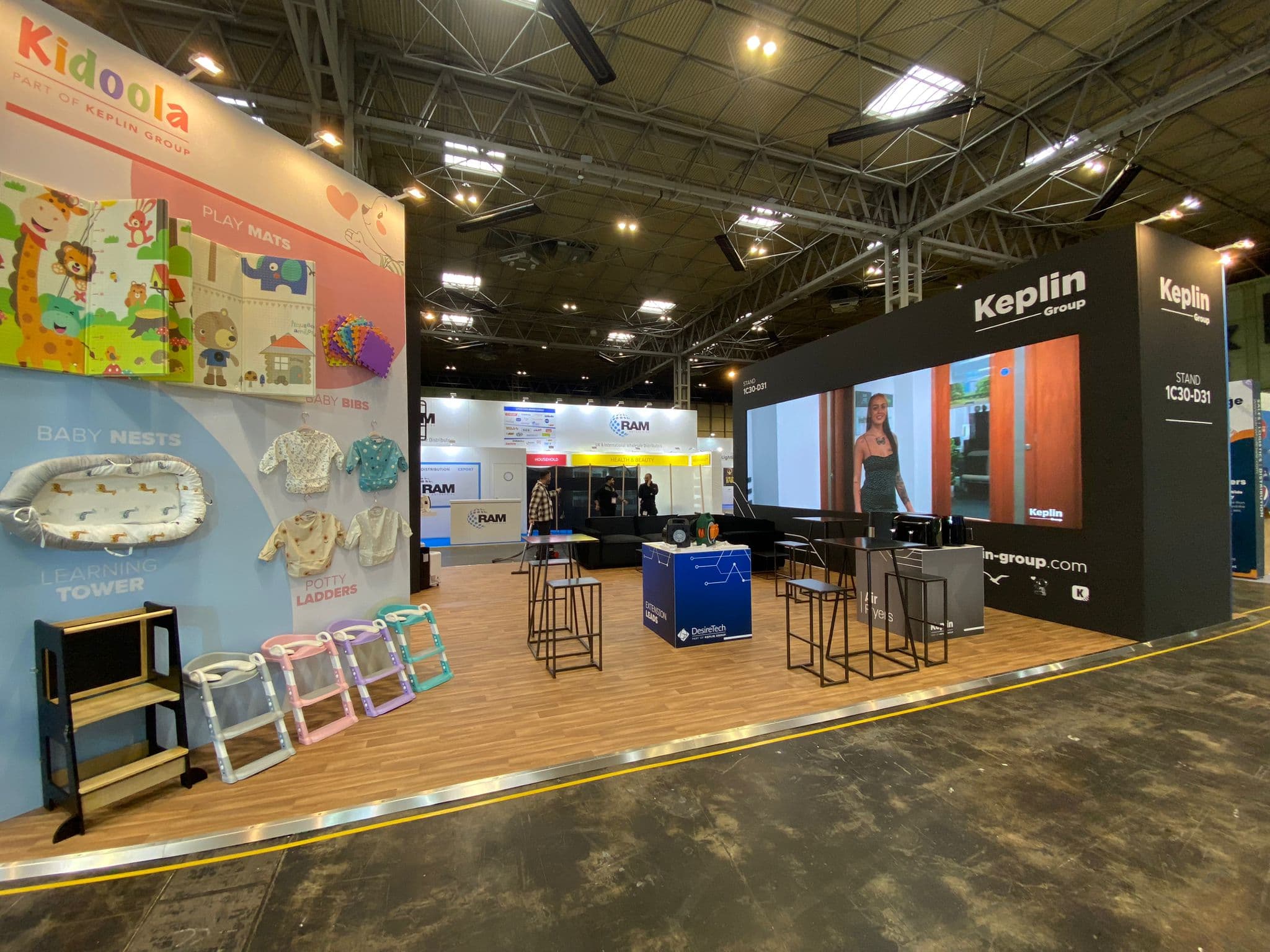
Example: We designed and built Keplin Group’s stands at Glee and NEC Spring Fair. Both ran at the NEC in Birmingham, where the venue’s rules and loading schedule shape the plan from day one.
How to Plan an Exhibition Stand Without Missing a Deadline?
Start with the show’s exhibitor manual, then work backwards from build-up day. Good exhibition stand planning puts the brief, plan approval, rigging orders and artwork deadlines on one calendar before design work begins.
- Read the manual first. It sets height limits, approval dates, rigging deadlines and power orders.
- Pick one goal. Lead capture, product demos and client meetings need different layouts.
- Fix size and budget. Footprint and spend decide which stand type is realistic.
- Brief a builder early. Our recommendation: at least three months before build-up for a custom stand. Modular systems need less.
- Approve the design and submit plans. Do this before the organiser’s cut-off, not on it.
- Lock the artwork. Once the design is approved, treat every late change as a reprint risk.
How Do UK Venues Change Your Exhibition Stand Planning?
Every venue and organiser sets its own rules on height, rigging, power and approval dates. Check them early, because a stand that passes at one show can fail at another.
- ExCeL London: Fact: stand build regulations for shows held there treat anything over 4 metres as a complex structure that needs structural calculations. The same regulations warn that permission to build can be revoked if a design breaks the rules.
- Olympia London and the Business Design Centre: Both sit in historic buildings, so access routes, floor loading and loading-bay times can limit what you bring in. Confirm them with the organiser.
- NEC Birmingham: A long delivery from London needs scheduling around the venue’s loading times.
- All venues: Electrical work must follow the Electricity at Work Regulations and the venue’s own electrical rules.
Our view: ask the organiser for the stand build regulations before the first sketch. Our designers test every layout against height, rigging and structural rules before client sign-off.
Which Stand Type Fits Your Show?
A shell scheme suits a simple, low-cost presence. Modular stands suit brands that attend several shows a year. A custom space-only build suits launches, large footprints and hospitality areas.
| Stand type | Best for | Main trade-off |
|---|---|---|
| Shell scheme | First-time or single-show exhibitors | Little room for branding |
| Modular | Repeat exhibitors on a show circuit | Layouts limited to the system’s parts |
| Custom space-only | Launches, large stands, hospitality | Longer lead time, higher cost |
Our stands range from a 3 metre inline shell to a 200 square metre island with two storey hospitality.
Custom builds borrow from theatre and live events. Our event set design London team shapes themed fronts, feature walls and branded installations, and the same workshop builds the structure.
Graphics are what visitors read first. Large format printing London from our in-house facility covers fascia graphics, hero walls, floor vinyls and backlit fabric, with same-day reprints if artwork gets damaged.
Screens and kiosks need planning as part of the structure, not added afterwards. Our audio visual production services team integrates LED walls, touch kiosks and content into the stand and tests them before they leave the workshop.
What Should You Look for in an Exhibition Stand Partner?
Look for a builder that designs, fabricates, prints and fits AV under one project manager. Fewer hand-offs mean fewer gaps, and one person to call when something changes on site.
- An in-house workshop that trial-assembles the stand before delivery.
- Experience at your venue, with named shows and halls you can check.
- Renders and CAD plans at concept stage, not after the quote is signed.
- Spare parts and technicians on the floor during show hours.
- Recognised standards. Kudos AV holds four ISO certifications: quality (9001), environmental (14001), health and safety (45001) and information security (27001).
Kudos AV grew from a West London DJ business in 2009 into a team of 27 full-time specialists handling 500+ events a year. We also took Gold for AV / Tech Provider at the Cool Event Awards 2026.
How Much Does Exhibition Stand Production Cost?
Cost depends on stand size, build type, materials, AV, print and delivery distance. There is no standard price, so ask for an itemised quote against a written brief.
The main drivers:
- Size and height. Taller structures may need engineering sign-off.
- Custom or modular. Custom builds cost more to design and fabricate. Modular parts can be reused.
- Finish and materials. Painted MDF, powder coated steel and acrylic are priced differently.
- AV and print. LED walls, kiosks and large graphics add up quickly.
- Venue services. Power, rigging and cleaning are usually ordered through the venue.
Our recommendation: keep a contingency line for late changes and venue extras. Kudos AV gives same-day quotes on most enquiries, and complex multi-venue briefs can take up to 48 hours.
Planning a Stand for Your Next UK Show?
Send Kudos AV your show name, stand size and target dates. A dedicated production manager reviews your brief, and most enquiries get a same-day quote. Contact our team or call +44 1895 207995.
Planning a Stand for Your Next UK Show?
Send Kudos AV your show name, stand size and target dates. A dedicated production manager will review your brief, and most enquiries receive a same-day quote.
FAQs
How far in advance should I book an exhibition stand builder?
For a custom stand, aim for at least three months before build-up. Modular and shell scheme stands need less time. Organiser deadlines for plans, rigging and power can fall weeks before the show, so check your manual first.
What is the difference between a shell scheme and a space-only stand?
A shell scheme is a ready-made booth with walls and a fascia, and you add graphics and furniture. A space-only stand is bare floor. You or your builder design and build everything, subject to organiser approval.
Do I need the organiser to approve my stand design?
For space-only stands, usually yes. Organisers ask for plans before the build and can refuse permission if a design breaks their rules. Taller structures typically need structural calculations as well.
Can one company handle my stand, print and AV together?
Yes, if the company has all three in-house. Kudos AV designs and builds stands in its London workshop, prints graphics in-house and integrates screens, lighting and sound under one project manager.
Does Kudos AV build exhibition stands outside London?
Yes. We are London-based and deliver across the UK, including the NEC in Birmingham. International support is available on request.
Your Next Show Deserves a Stand That Is Ready on Build-Up Day
Knowing how to plan an exhibition stand comes down to three habits: read the manual early, lock the brief, and keep building, printing and AV with one team. Do that, and build-up day becomes a checklist instead of a scramble.
Tell Kudos AV about your next show and we will come back with a plan and a quote.
 Insights & Guides
Branded vs Bespoke Event Sets: Choosing the Right Scenic Approach for Your Brand Activation
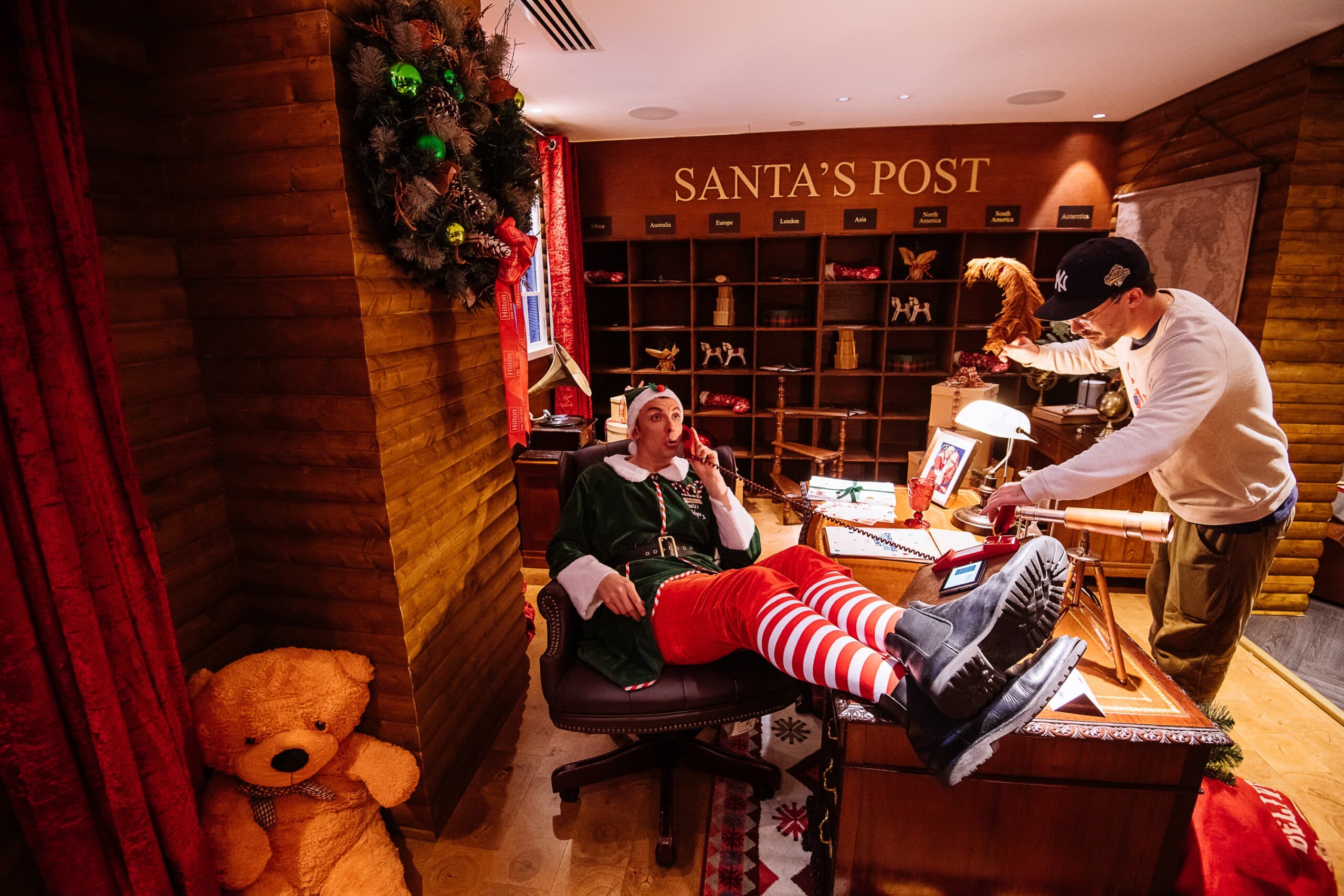
A branded set applies your brand to proven components. A bespoke build invents the room. Here is how to choose between them for a brand activation, and what each one really costs in time.
Read the guide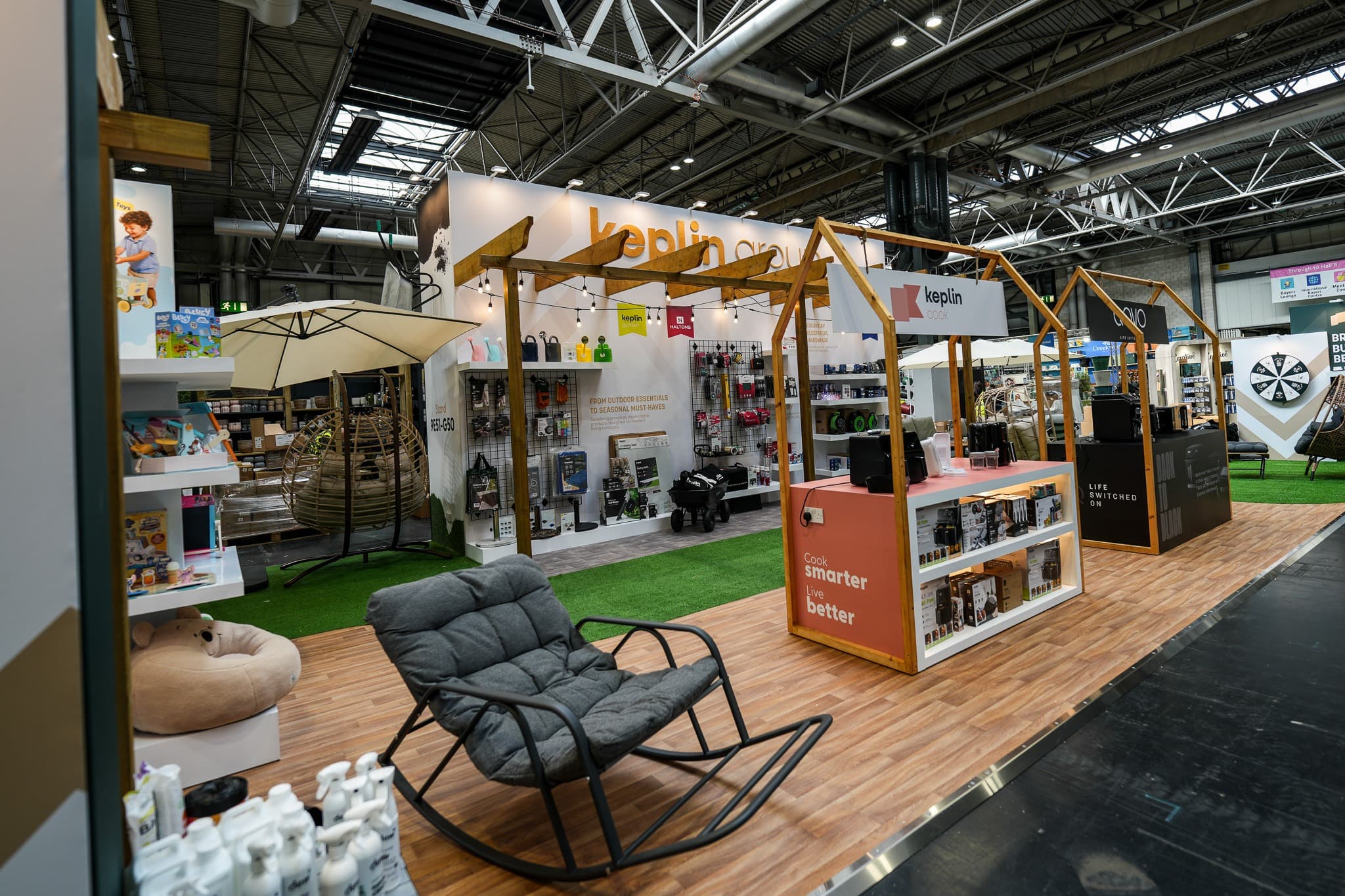 Insights & Guides
What to Look for in an Exhibition Stand Builder - and Why In-House Production Changes Everything?
What to check before choosing a stand builder, from design and in-house fabrication to AV integration, installation and show-day support.
Read the guide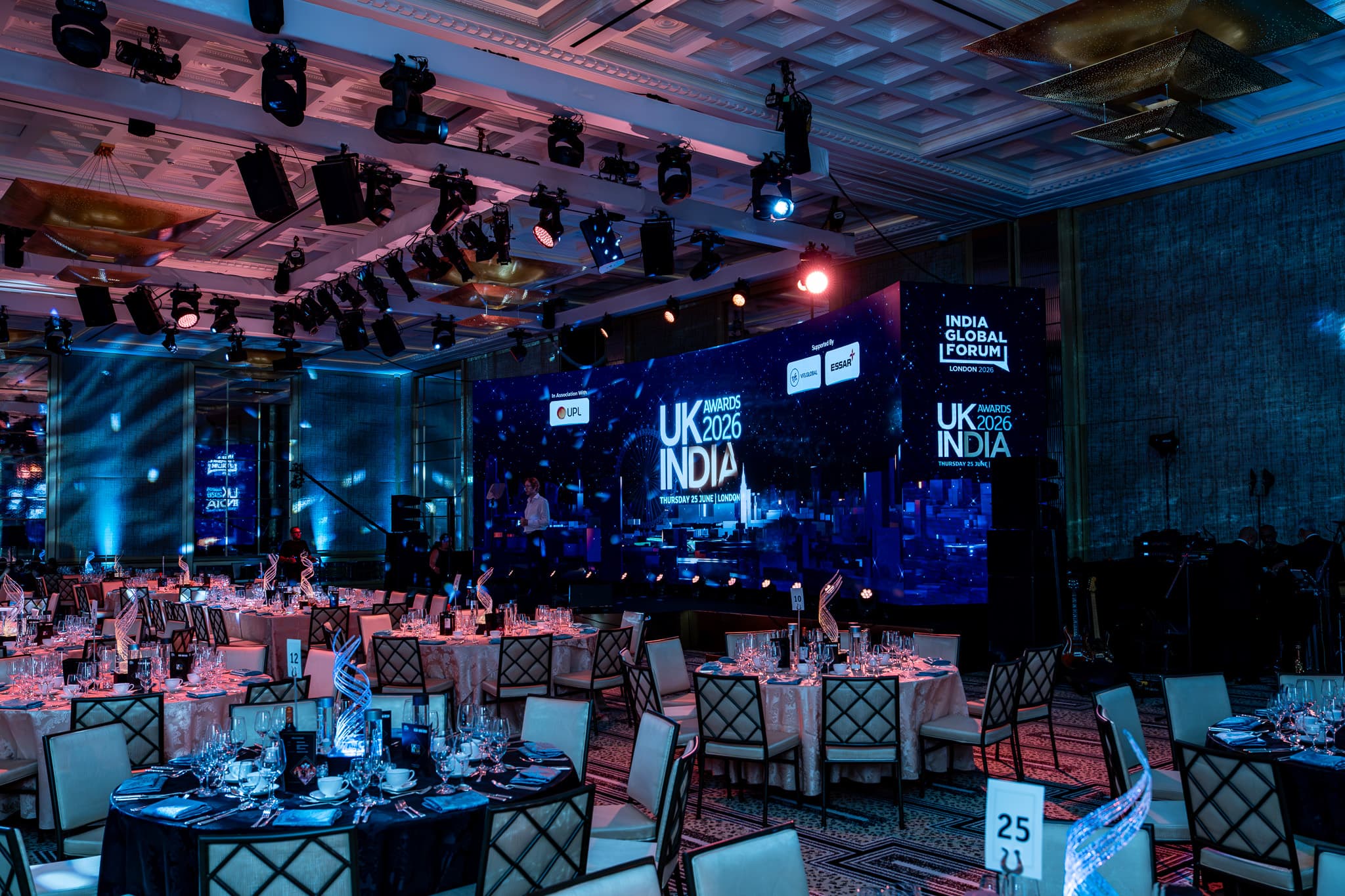 Insights & Guides
What Makes a Great Stage Design for Corporate Events?
Sightlines, branding, production integration and room to move, the principles of stage design that turn a platform into an event people remember, plus stage layouts by event type.
Read the guide