Why Your Dream Stage Might Not Fit Your Venue
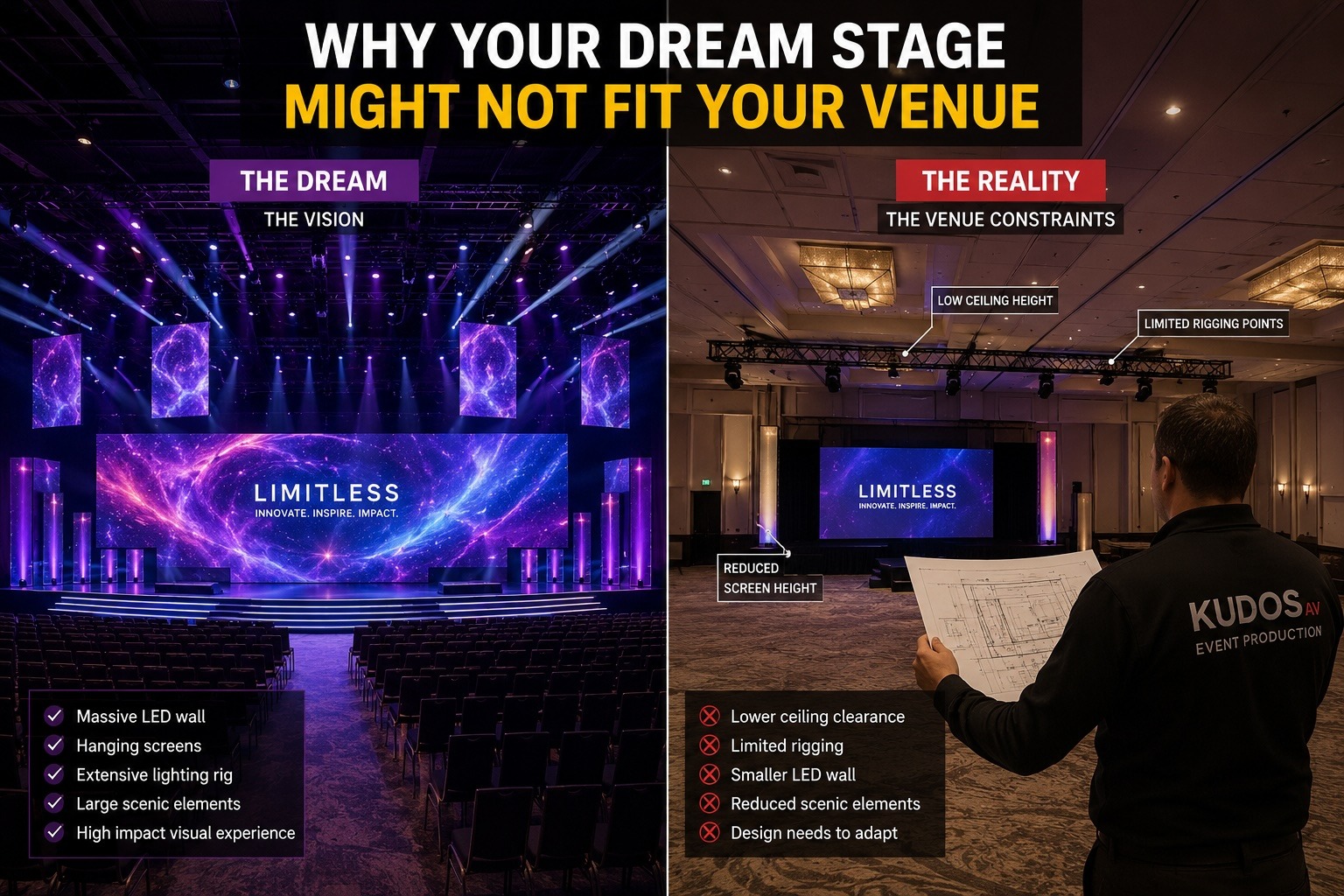
Have you ever fallen in love with an event stage design online, only to find later that it would never work in your venue? It happens more often than many event planners expect. A stage that looks incredible in a concept render can quickly run into challenges once real world venue limitations come into play.
Several factors affect what is possible on event day: low ceilings, limited rigging, access routes and installation schedules. These common event stage design venue constraints often mean production teams adapt a concept so it works safely and effectively within the space available.
Kudos AV helps event organisers create staging, lighting, visual and production solutions for conferences, corporate events, awards ceremonies and live experiences. Our team works closely with venues and clients to develop stage concepts that are both visually impressive and achievable within the available space.
Key Takeaways
- Every venue has its own physical constraints that can affect stage design.
- Ceiling height, rigging options and access routes all shape production decisions.
- Assessing the venue early prevents costly design changes.
- Installation schedules are a significant factor in event planning.
- Successful stages balance creativity with venue realities.
- Production teams help transform concepts into workable event experiences.
Why Do Stage Designs Often Change After Venue Visits?
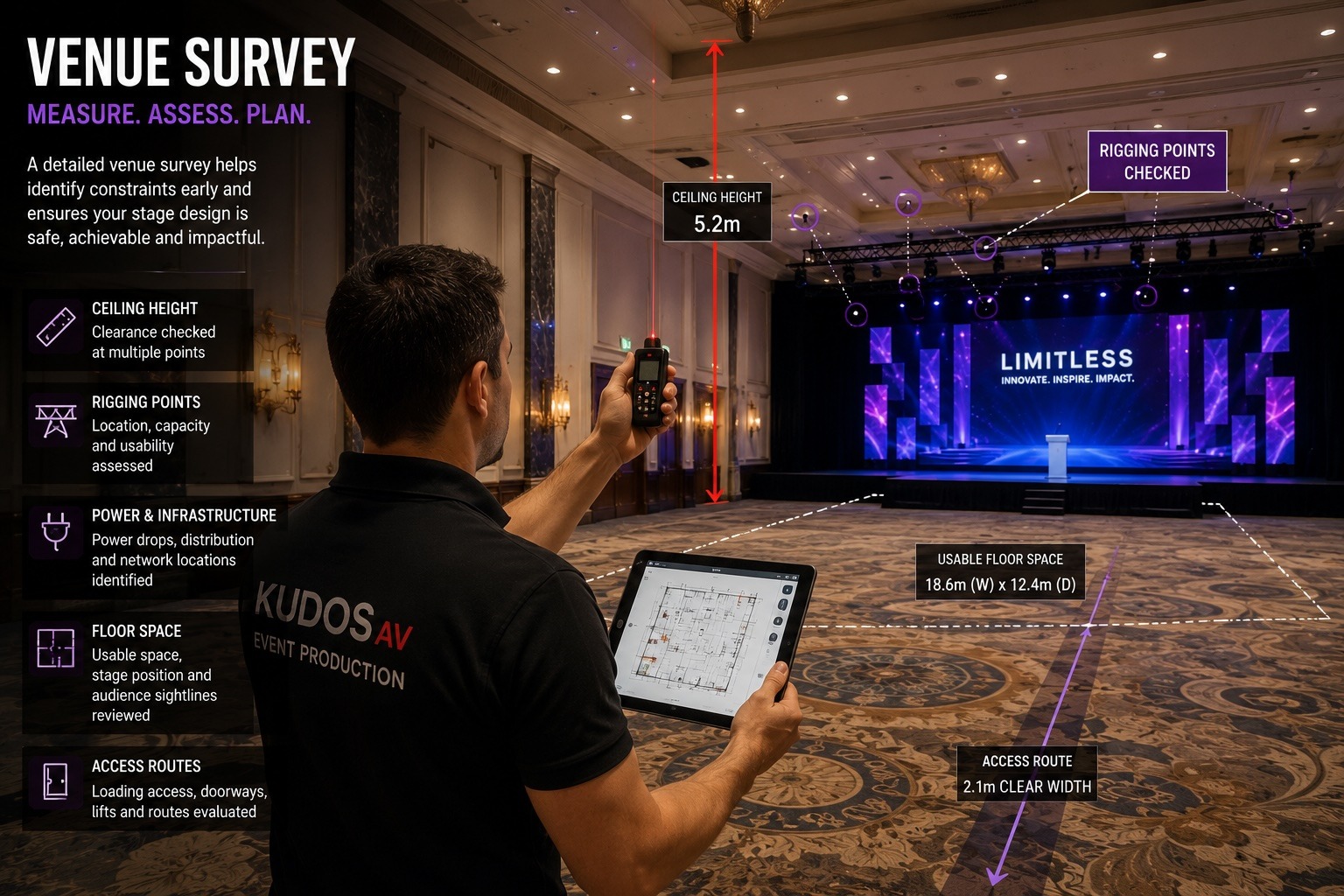
Many event planners start with an idea: sketches, images or digital mockups of giant LED walls, dramatic lighting and scenic features. The challenge is that every venue is different. A concept that suits one building, with its access and technical infrastructure, may not suit another. That is why production teams nearly always make a site visit before signing off a design.
These visits involve the team evaluating:
- Available floor space
- Ceiling clearance
- Rigging capabilities
- Loading access
- Technical infrastructure
These evaluations help identify potential issues before production begins.
How Do Venue Constraints Affect Stage Design?
Identifying the limits of a venue early saves time and money later in planning. Common constraints include:
- Limited stage depth
- Restricted ceiling clearance
- Fixed architectural features
- Limited power availability
- Audience sightline challenges
- Venue safety regulations
These factors affect screen placement, lighting positions, scenic structures and even the overall size of the stage. The earlier they are found, the easier it is to adapt the design without losing the original idea.
Why Is Ceiling Height So Important?
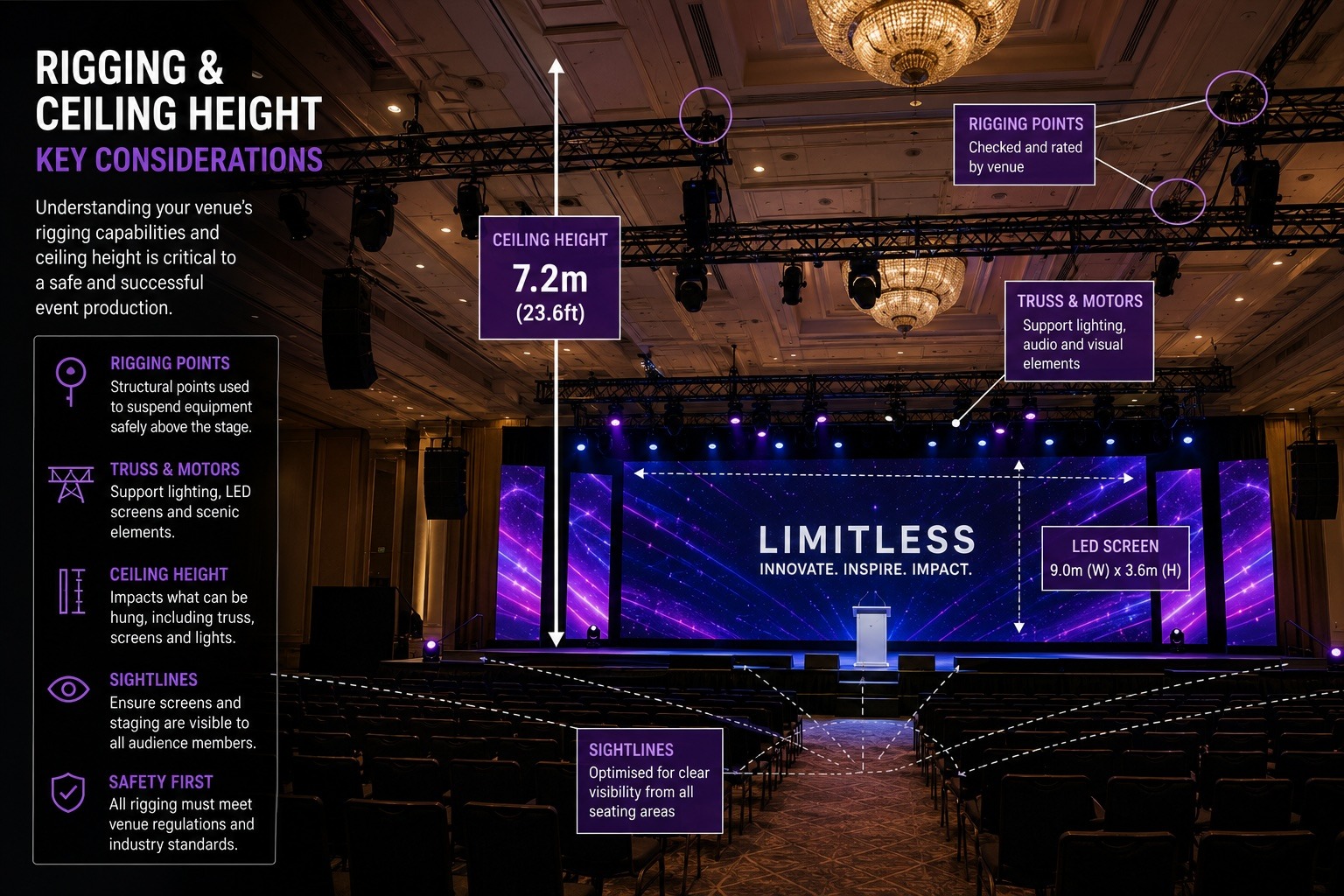
One of the most overlooked factors in event production is ceiling height for event staging. A low ceiling can restrict:
- LED wall height
- Lighting truss installations
- Scenic elements
- Camera positions
- Hanging signage
Many stage concepts look impressive because they use vertical space. When a venue lacks the height, production teams often redesign parts of the setup to fit safely within the available area. This is why accurate venue measurements are such a critical part of the planning process.
What Are Rigging Points and Why Do They Matter?
Many production elements are suspended above the stage rather than stood on the floor. This is where rigging points for venue events become important. Rigging points are structural locations within a venue that allow equipment to be safely suspended overhead. They often support:
- LED screens
- Lighting systems
- Audio equipment
- Scenic features
- Branding elements
Not every venue offers the same rigging capabilities. Some have extensive infrastructure, while others have limited or no overhead support. Production teams need to understand these restrictions before confirming a stage design.
Can Venue Access Impact Event Production?
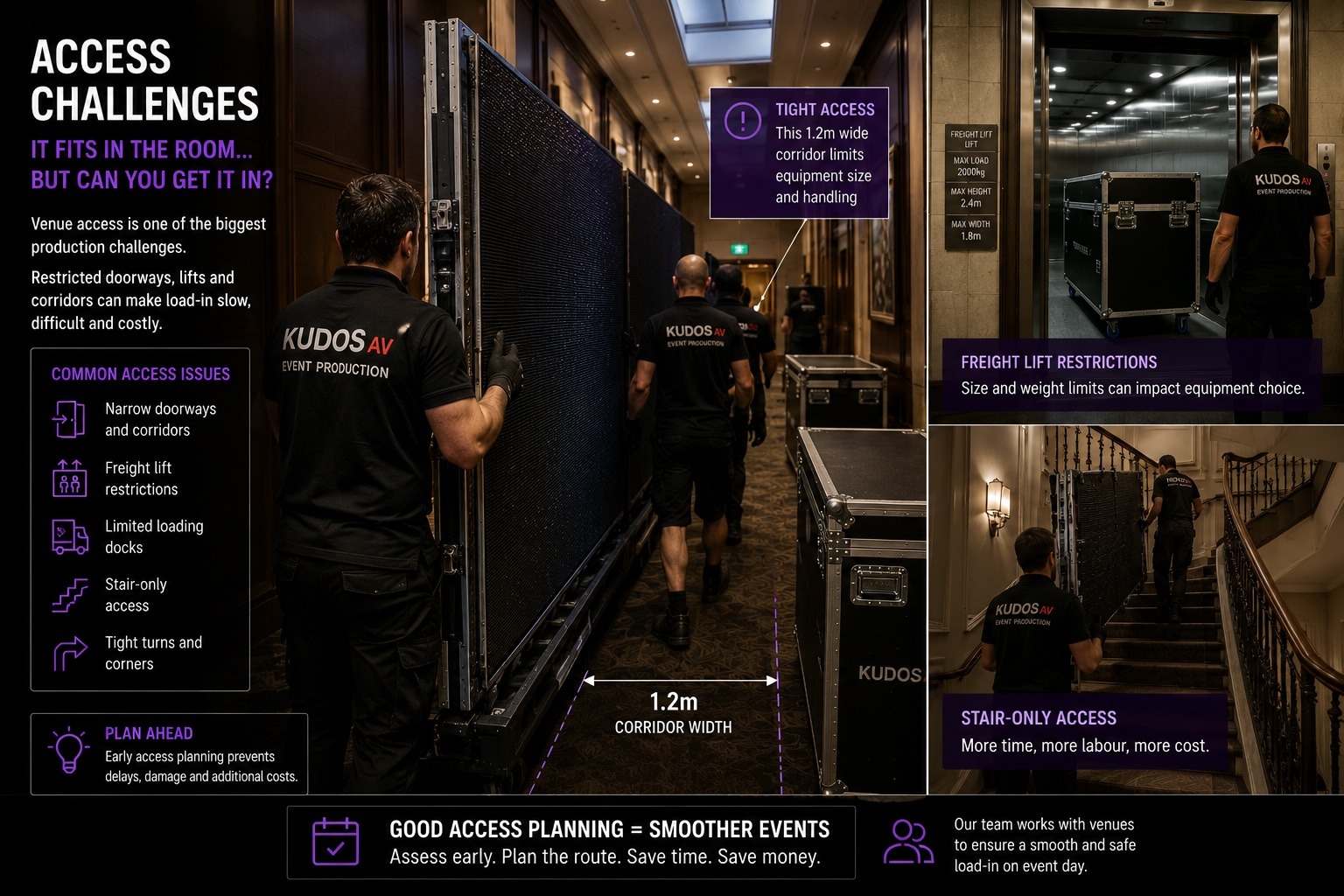
Yes. One of the most common production challenges happens before equipment even reaches the event space. Large staging elements, LED walls and scenic structures all have to be transported into the venue, and restricted access routes make installation much harder. Common challenges include:
- Narrow doorways
- Limited loading docks
- Freight elevator restrictions
- Tight hallways
- Stair only access
In some cases a stage design physically fits inside the venue but cannot be moved into the room efficiently. This is why access planning is an essential part of production logistics.
Why Does Load In Time Matter So Much?
Many venues operate on tight schedules. Understanding load in time event production requirements helps planners avoid unnecessary stress and delays. Some venues allow installation several days before an event, while others provide access only a few hours before guests arrive. Here is a simple example:
| Event Type | Typical Setup Time |
|---|---|
| Small Meeting | A few hours |
| Conference | Half day to full day |
| Awards Ceremony | Full day |
| Large Production Event | Multiple days |
When installation windows are limited, production teams may simplify certain stage elements to be sure everything is completed on schedule.
How Can You Plan a Stage That Fits Your Venue?
The best stage designs start with a clear understanding of the venue. Involving production teams early helps identify potential challenges before they affect the event. A few simple steps make the process easier. This is the heart of how to plan stage design for your venue.
Visit the venue early
Early site visits uncover space and technical limitations.
Share venue drawings
Floor plans provide valuable detail for staging and production planning.
Allow flexibility
Small adjustments help a design work better within the space.
Include production teams early
Technical specialists can spot issues before they become expensive changes.
Consider audience experience
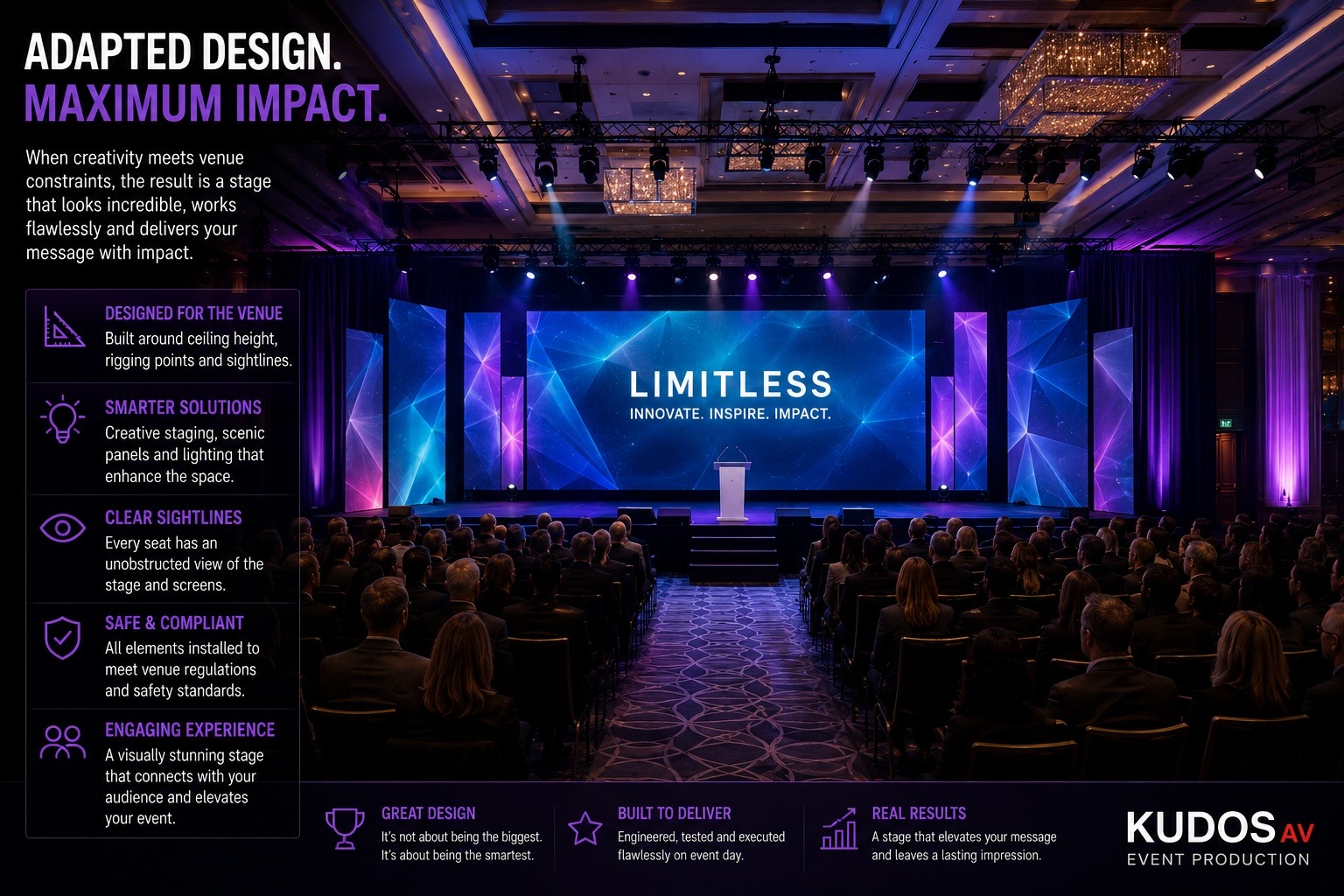
Great stage design supports clear sightlines and audience engagement from every seat.
Why Do Production Teams Always Start With the Venue?
Experienced event professionals rarely begin with equipment lists or technical specifications. They begin with the venue. Every production decision is influenced by:
- Available space
- Venue infrastructure
- Audience capacity
- Safety requirements
- Installation schedules
Kudos AV regularly works with venues of varying sizes and layouts, helping event organisers create stage designs that work within real world conditions while still delivering strong visual impact.
How Are Corporate Event Stages Evolving?
Modern stage design for corporate events London projects is becoming more flexible, creative and visually engaging. Organisers want stage environments that not only support presentations but also create memorable audience experiences. Many now favour:
- Modular stage systems
- Large LED displays
- Dynamic lighting designs
- Digital scenic elements
- Hybrid event integration
These solutions let production teams create engaging environments while adapting to different venue sizes and technical requirements. In the same way, event set design London trends are moving toward adaptable staging elements that can be reconfigured for different venues while still delivering strong visual impact.
Let Us Turn Your Event Vision Into Reality
A great stage is not just about impressive visuals. It is about a design that works perfectly within the venue while delivering an engaging audience experience. Kudos AV helps event organisers turn creative ideas into professionally planned staging solutions that fit the space, support production requirements and bring event concepts to life.
Conclusion
A successful stage design begins long before installation day. Venue dimensions, ceiling clearance, rigging options, access routes and production schedules all play a major role in determining what can realistically be achieved.
Understanding event stage design venue constraints early helps avoid costly redesigns, installation delays and technical challenges later in the planning process. The most successful events balance creative vision with careful planning, so production teams can build impressive stage environments that work beautifully within the venue.
Kudos AV supports event organisers across conferences, corporate events, awards ceremonies and live productions, helping transform creative concepts into stage designs that are both visually impactful and production ready. If you want a stage that captures attention, makes the most of your venue and delivers a seamless event experience, we are ready to help bring your vision to life.
Frequently Asked Questions
Why might a stage design not fit a venue?
A stage design can be affected by ceiling height, available floor space, rigging limitations, venue access restrictions or installation schedules. A site visit and venue drawings help confirm what is achievable before the design is finalised.
How does ceiling height affect event staging?
Ceiling height influences the placement of LED screens, lighting systems, scenic elements and any suspended production equipment. A low ceiling can mean parts of the setup are redesigned to fit safely.
What are rigging points in event venues?
Rigging points are structural locations that allow production equipment such as lighting, audio systems and LED displays to be safely suspended overhead. Not every venue offers the same rigging capability.
Why is load in time important for event production?
Load in time determines how long production teams have to install staging, lighting, visuals and technical equipment before an event begins. Tight windows can mean simplifying certain elements to stay on schedule.
When should staging companies be involved in event planning?
Production and staging teams should ideally be involved as early as possible, so venue limitations are identified and the design is realistic from the start.