How We Calculate Audio for Any Event Space
Have you ever been to an event where the speaker sounded clear at the front of the room, but people further back struggled to hear? Even the best presentation loses its impact when the audio is not evenly distributed across the venue.
Creating great event audio involves far more than choosing speakers and turning up the volume. Every venue has different acoustic characteristics, which is why production teams assess audience size, room layout, acoustics and coverage requirements when deciding how to calculate audio for events.
Kudos AV provides professional sound production for conferences, corporate events, awards ceremonies, live productions and hybrid experiences, helping deliver clear, balanced audio tailored to different venues and audience sizes.
What This Guide Covers
This guide explains how professional event teams determine sound requirements, analyse venue acoustics, optimise speaker placement and design a system that delivers clear, consistent coverage across any event space.
- Every venue needs a different audio design based on size, layout and audience capacity.
- Room acoustics are a major factor in sound quality.
- Speaker positioning shapes how sound reaches each listener.
- Delay speakers keep audio even across larger spaces.
- Professional tuning balances the sound throughout the room.
- Successful events rely on planning, testing and experienced sound engineering.
Why One Sound System Does Not Work For Every Event
Many people assume a bigger speaker system automatically means better sound. In reality every venue is different and has different needs. Presenting to 30 people in a boardroom calls for a very different setup than a conference for 1,000 or a live show with several performers.
When audio engineers plan sound system design for event venues they consider:
- Venue size
- Audience capacity
- Ceiling height
- Room layout
- Indoor or outdoor location
- Event format
These factors determine the type and quantity of equipment needed to achieve even sound coverage throughout the venue.
What Do Audio Engineers Check Before an Event?
Sound engineers spend time assessing the venue and the needs of the event long before any equipment arrives on site. Key elements include:
- Seating layout and audience size
- Stage location
- Venue dimensions
- Ceiling height
- Wall and floor materials
- Presentation and performance requirements
- Wireless microphone requirements
- Multiple rooms or breakout areas
This planning lets engineers anticipate how sound will travel through the space, and spot potential problems before the event begins.
Event Room Acoustics Explained: Why the Venue Matters
One of the most important parts of audio planning is understanding how sound behaves inside a venue. Every surface in a room affects how sound travels.
Hard surfaces such as glass, concrete and metal reflect sound. Those reflections create echoes and reduce speech intelligibility. Soft surfaces such as carpet, curtains and upholstery absorb sound and reduce reflections.
A hotel ballroom with carpeted floors sounds very different from a large exhibition hall with concrete walls and high ceilings. Understanding these differences, the heart of event room acoustics explained, lets engineers adjust the system design and speaker placement accordingly.
How Do We Calculate Speaker Coverage?
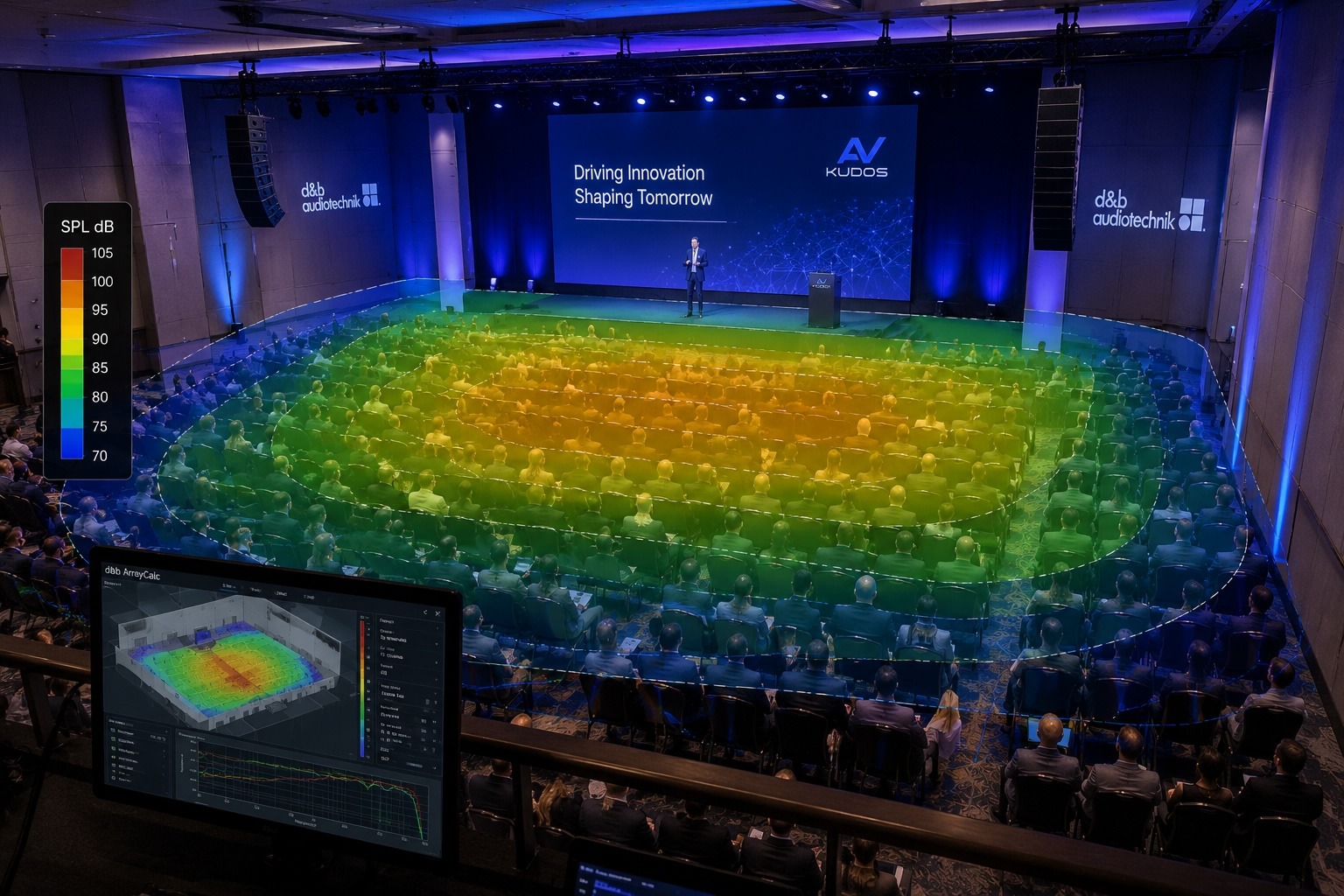
Speaker coverage is about delivering sound evenly to every attendee, wherever they are sitting. Engineers do not simply turn up the volume. They divide the venue into coverage zones and design a system that gives consistent sound across all of them.
Here is a simple example of how requirements change with the room:
| Event Type | Audience Size | Typical Audio Requirement |
|---|---|---|
| Boardroom Meeting | 20 to 50 | Compact speaker system |
| Conference | 100 to 500 | Distributed speaker coverage |
| Awards Ceremony | 300 to 1,000 | Main PA with supplementary speakers |
| Exhibition | Multiple zones | Zoned audio systems |
| Live Concert | 1,000 plus | Large scale sound reinforcement |
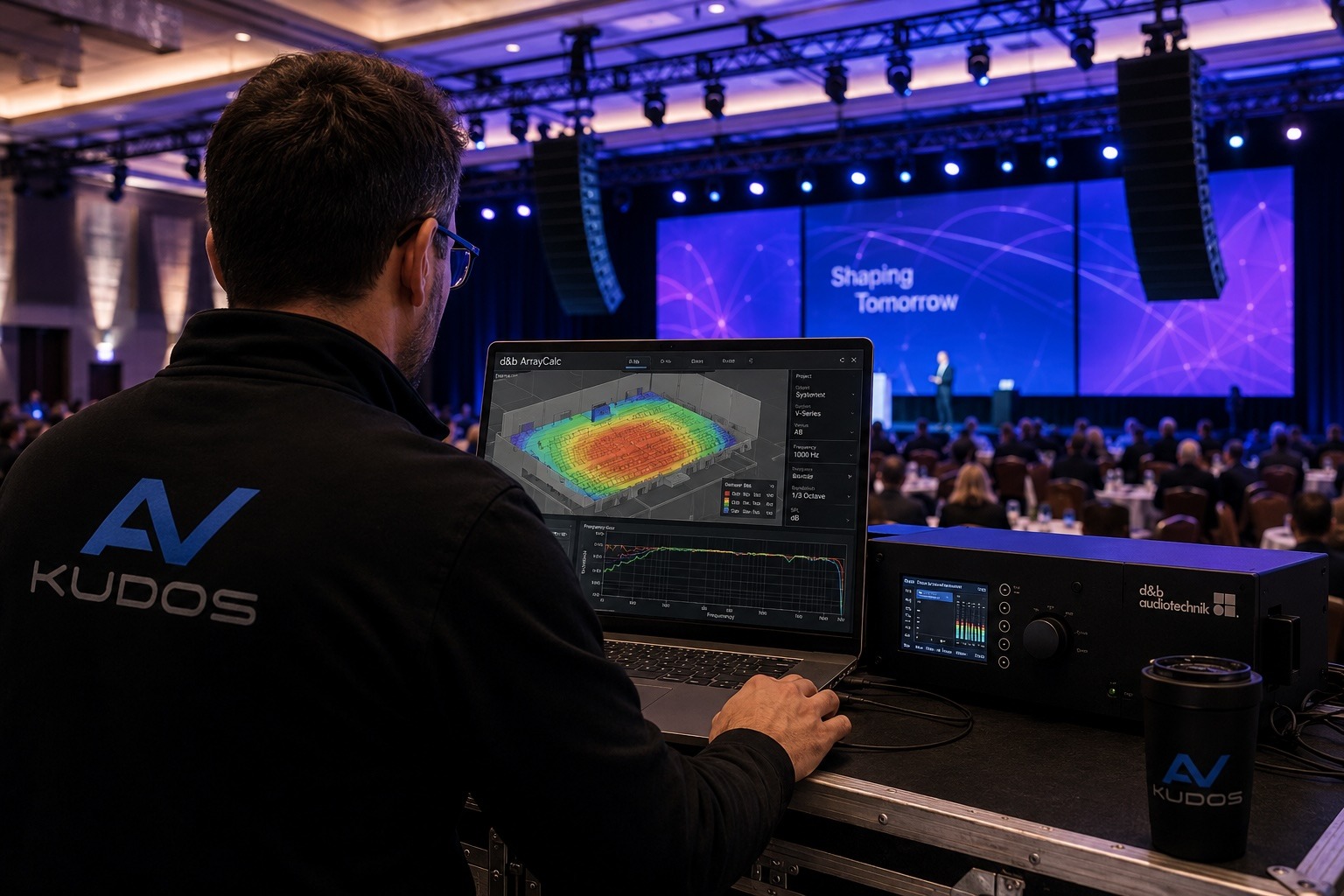
Before we specify a single speaker, our engineers model the system in d&b audiotechnik ArrayCalc, the manufacturer’s acoustic simulation software. We plot the stage, the seating and every speaker position, then predict how sound pressure spreads across the room. Seeing coverage, levels and problem areas on screen before load in is a core part of how we calculate audio for events, and it means the design that arrives on site is already shaped around the venue. This process helps avoid areas that are too loud or too quiet.
Why Is Speaker Placement Important?
Even the best sound system can sound poor if the speakers are badly placed. Proper speaker placement for corporate events helps every audience member hear presentations clearly, wherever they are seated. The benefits include:
- Improved speech intelligibility
- More uniform sound coverage
- Fewer audio reflections
- Lower risk of feedback
- A better audience experience
Engineers position the speakers to cover the audience without bouncing excessive reflections off walls and ceilings.
What Is an Audio Delay Stack?
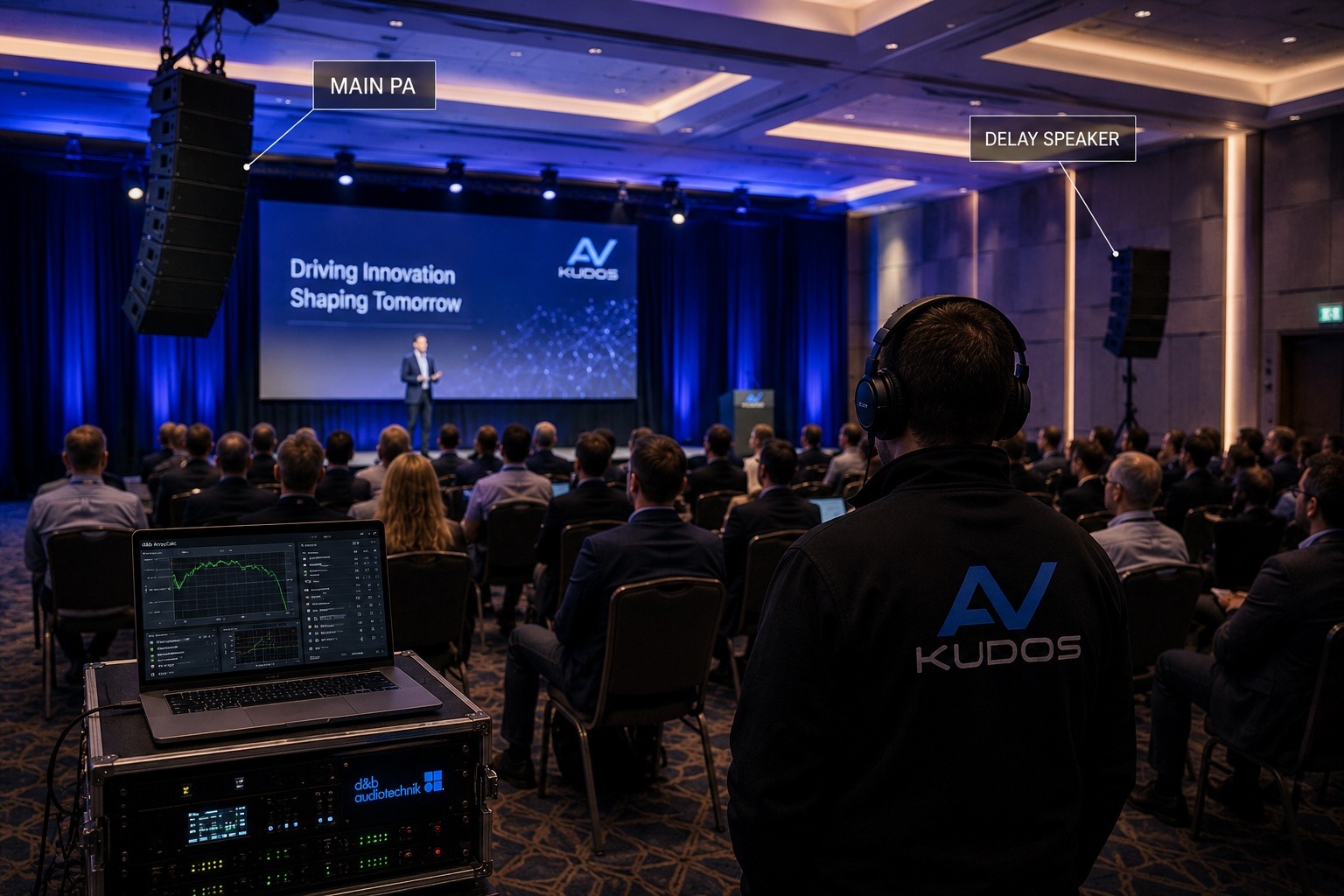
In larger venues, several speaker systems may be needed to cover the whole audience area. In many audio delay stacks events setups, additional speakers are placed further back in the room and time aligned to the main PA, so sound stays consistent from front to back.
Without delay speakers, attendees seated farther away can hear delayed or uneven audio. Coordinating the delays with the main system keeps the sound even across the whole space.
How Do AV Companies Tune Audio Before an Event?
Once the equipment is installed, the work is not finished. Understanding how AV companies tune audio at events explains why professional setup and testing matter so much. The tuning process usually includes:
- System testing
- Volume balancing
- Frequency adjustments
- Wireless microphone checks
- Venue wide sound measurements
- Playback testing
These adjustments balance the listening experience and reduce feedback, uneven levels and poor speech clarity. To keep performance reliable across very different event scenarios, Kudos AV carries out thorough testing and tuning on every build.
Common Audio Challenges Event Engineers Solve
Every venue brings its own challenges that need planning and technical know how. Some of the most common are:
- Venues with echo and long reverberation
- Large audience rooms
- Multiple presentation areas
- Mixing sound for hybrid events
- Wireless microphone interference
- Outdoor environmental noise
For outdoor events we also predict noise spill using tools such as d&b NoizCalc, so the system stays within site limits while still covering the audience. Professional sound teams recognise these issues early and adapt the system design so every part of the event connects clearly.
Why Local Venue Experience Makes a Difference
Familiarity with a venue speeds up planning and setup. Experience in event sound engineering in London is particularly valuable because venues vary so much in size, layout and acoustics. From historic buildings and conference centres to exhibition halls and corporate venues, each location has different audio requirements. Teams who have worked across a wide range of venues tend to identify potential challenges earlier and plan more efficiently.
What Happens When Audio Is Not Properly Calculated?
A poor audio plan can undermine an event in several ways. Typical problems include:
- Uneven sound coverage
- Audience frustration
- Missed information
- Audio feedback and ringing
- Echo and reverberation
- Lower audience engagement
Even a well designed event struggles if attendees cannot clearly hear the presentations, speakers or performers.
How Professional Audio Planning Improves Event Experiences
Successful audio production is about much more than equipment. Professional planning helps create:
- Consistent sound quality
- Stronger audience engagement
- Clear communication
- Better event flow
- Fewer technical disruptions
When sound is planned properly, guests focus on the content and the experience rather than on the audio.
Let Us Create an Event Everyone Can Hear and Enjoy
Great events deserve great sound. When audio is clear and balanced, audiences stay engaged and every message lands with more impact. Kudos AV creates seamless sound experiences that keep your event running smoothly from the first speaker to the final applause.
Conclusion
Calculating audio for an event involves far more than selecting speakers. Venue acoustics, audience size, coverage planning, speaker positioning, delay systems and system tuning all work together to create clear, consistent sound throughout the space.
Each location has its own challenges, and the right audio system can be the difference between an event that keeps everyone engaged and one that struggles to hold attention. Effective sound system design for event venues creates balanced coverage across the room, so every attendee can hear clearly throughout.
Kudos AV works with event organisers across conferences, corporate events, awards ceremonies and live productions, combining experienced audio engineers, professional sound systems and carefully planned production to deliver clear, consistent audio that leaves a lasting impression.
Frequently Asked Questions
How do you calculate audio requirements for an event?
Audio requirements are calculated by evaluating audience size, venue dimensions, room acoustics, event format and the speaker coverage needed to deliver consistent sound throughout the space. We model the system in simulation software before specifying equipment.
Why are room acoustics important for events?
Room acoustics affect how sound travels and reflects within a venue. Poor acoustics can reduce speech clarity and create echoes, so the system design and speaker placement are adjusted to suit each space.
What is the purpose of delay speakers?
Delay speakers spread sound evenly across larger rooms, so people further from the stage hear the audio at the right time and level. They are time aligned with the main PA to keep coverage consistent.
What do sound engineers do to improve sound quality before an event?
Before the event, engineers test and tune the audio system by balancing volume, adjusting frequencies, checking microphones and taking measurements throughout the venue.
Does every event need a different sound system?
Yes. Audience size, venue layout, acoustics and event objectives all influence the type of sound system required, so the design is tailored to each event.